
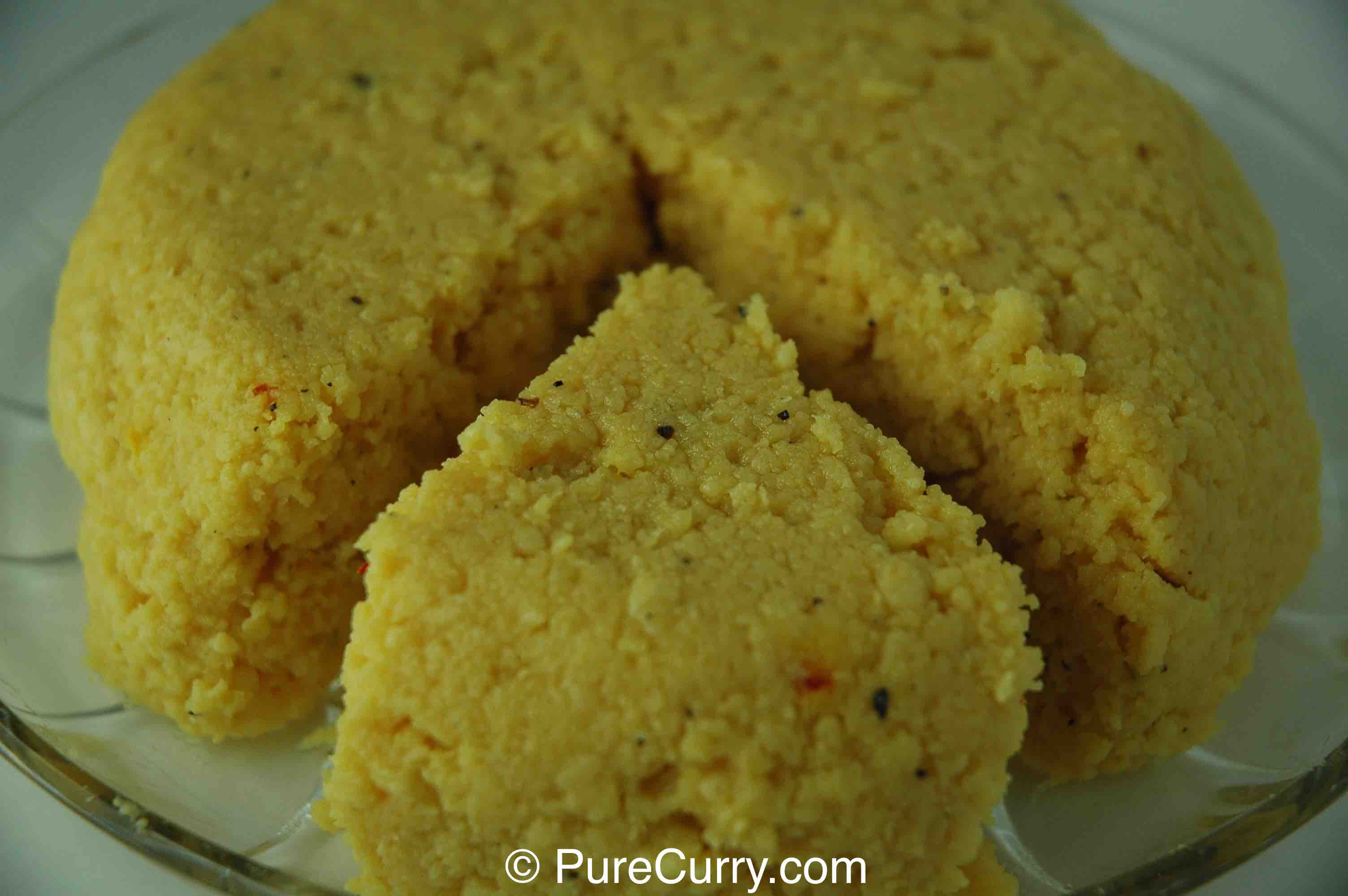
Milk Cake is one of those traditional desserts that beautifully transforms just milk and sugar into something rich, caramelized, and deeply satisfying. Popular across North India, this sweet is known for its slightly grainy texture and golden-brown interior that develops as the milk slowly cooks down.
While it does require patience—mainly stirring and reducing the milk—the technique itself is straightforward. The result is a dense, sliceable milk fudge with a delicate balance of sweetness and aromatic spices.
If you’ve made Fresh Paneer before, then you will notice that the method for making Milk Cake is somewhat similar. When making Paneer, the milk is curdled right after it comes to a boil and the milk solids are separated from the whey and set into a block. Whereas to make Milk Cake, the milk is first thickened and then a smaller quantity of lemon juice is added to make it curdle. The lemon juice makes the milk grainy but the milk solids do not completely separate from the whey. The curdled milk is then sweetened with sugar and cooked further; it is then cooled and set into a block.
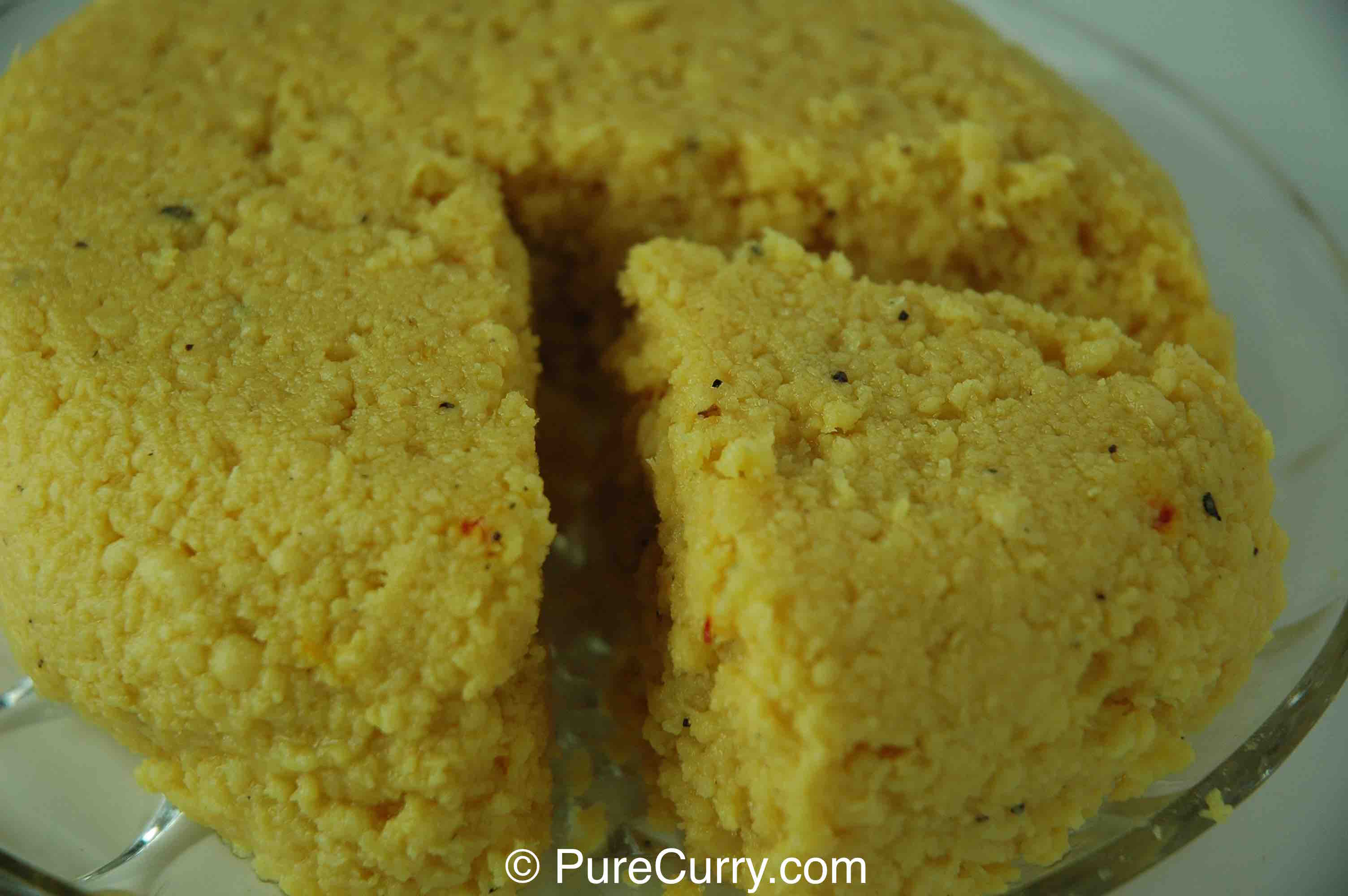
What is “Kalakand-Style”?
Kalakand is a traditional North Indian milk-based sweet made by reducing milk and then lightly curdling it to create a soft, moist, and grainy texture. It is typically less dense and more crumbly than Milk Cake, with a lighter color and a fresher, milky flavor.
When we say “Kalakand-style” Milk Cake, we’re referring to the technique of lightly curdling reduced milk, which creates that characteristic grainy texture. However, Milk Cake differs in a few key ways:
- It is cooked longer after adding sugar
- It develops a deeper caramelized flavor and darker color
- It is firmer and more sliceable, almost fudge-like in texture
In other words, this recipe uses the Kalakand method as a base, but takes it further to achieve the distinct richness and structure of Milk Cake.
Ingredient Notes
Whole Milk – The foundation of the recipe; full-fat milk is essential for richness and proper reduction.
Sugar – Added after curdling to sweeten and help with caramelization.
Lemon Juice – Used to lightly curdle the milk; do not overuse.
Cardamom Powder (elaichi) – Adds a warm, aromatic flavor.
Saffron (kesar, optional) – Enhances both color and aroma.
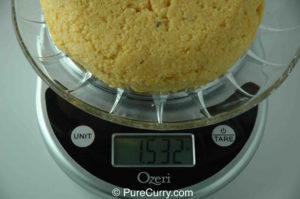
This recipe uses 10 cups of whole milk which produces about 1.5 pounds of Milk Cake.
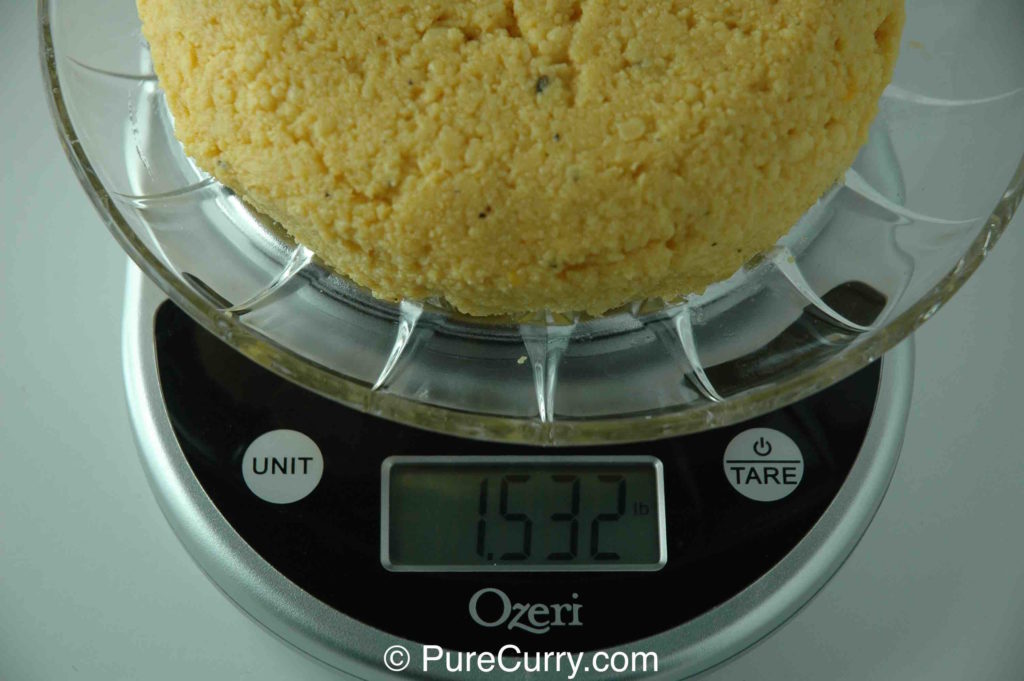
Ozeri Touch Professional Digital Kitchen Scale (12 lbs Edition), Tempered Glass in Elegant Black
Click on the image for the affiliate link.

Milk Cake
Ingredients
- 10 cups Whole Milk 1/2 gallon = 8 cups
- 1 cup Sugar
- 4 tbsp Lemon juice
- 1/2 tsp Cardamom Powder
- Pinch Saffron optional
Method
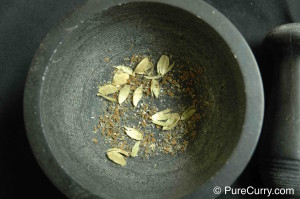
- Crush the pods in a mortar and pestle to release the seeds. Use only the crushed seeds and discard the skins.
- Bring the milk to a boil over medium-high heat in a heavy-bottomed pot to prevent burning. This may take about 15 minutes.
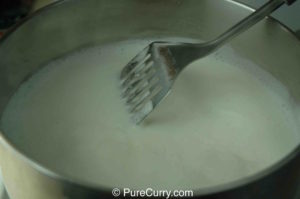
- Reduce heat to medium. Stir regularly to prevent the milk from sticking or burning at the bottom. Continue until the milk reduces to about 1/3 of its original volume, scraping the sides to incorporate any milk solids. This can take 30-45 minutes.
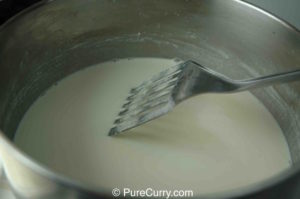
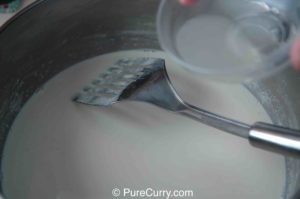
- Dilute lemon juice with 2 tbsp water. Reduce heat to low and stir it into the milk. Stop stirring and let it stand for 30 seconds. The milk will curdle slightly, forming tiny grains of the milk solids.
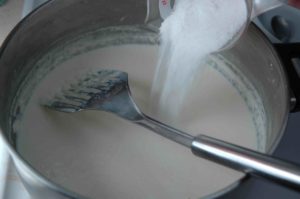
- Increase heat to medium. Add sugar and stir continuously, scraping the bottom to prevent sticking. The mixture will thicken further, caramelize, and take on a pudding-like consistency. Reduce heat to low.
- Stir in cardamom powder and saffron until fully incorporated.
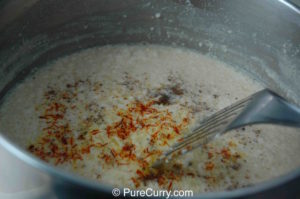
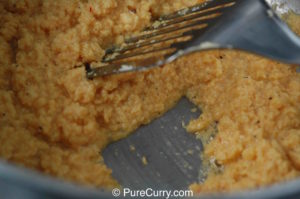
- Once the mixture moves as a single unit when stirred and no longer sticks to the bottom, remove from heat.
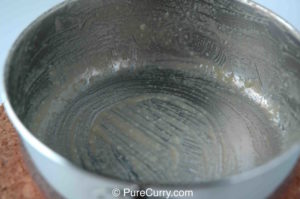
- Grease a vessel with ghee or unsalted butter.
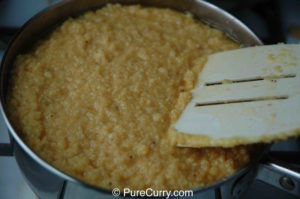
- Pour the milk cake mixture in, level it, and press down with a spatula to compact it.
- Let it cool completely at room temperature; it will continue to caramelize as it sets.
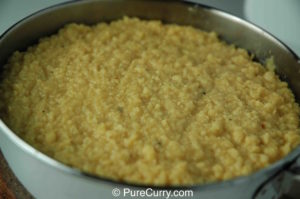
- To release the cake, run a knife along the edges, place the vessel on low heat for 6–8 seconds, then invert onto a plate. Tap gently if needed.
- This recipe yields about 1.5 pounds of milk cake.



Leave a Reply