
Rabri is a rich, slow-cooked Indian milk dessert made by gently reducing sweetened milk until it thickens into layers of creamy solids. These delicate layers formed as the milk simmers are what give rabri its signature texture. It’s lightly flavored with aromatic spices like cardamom and saffron and finished with nuts for added richness.
This dessert is often enjoyed on its own, but it also pairs beautifully as a topping for classics like jalebi or gulab jamun. It’s also a practical way to use up extra milk before it expires, transforming it into something truly special.
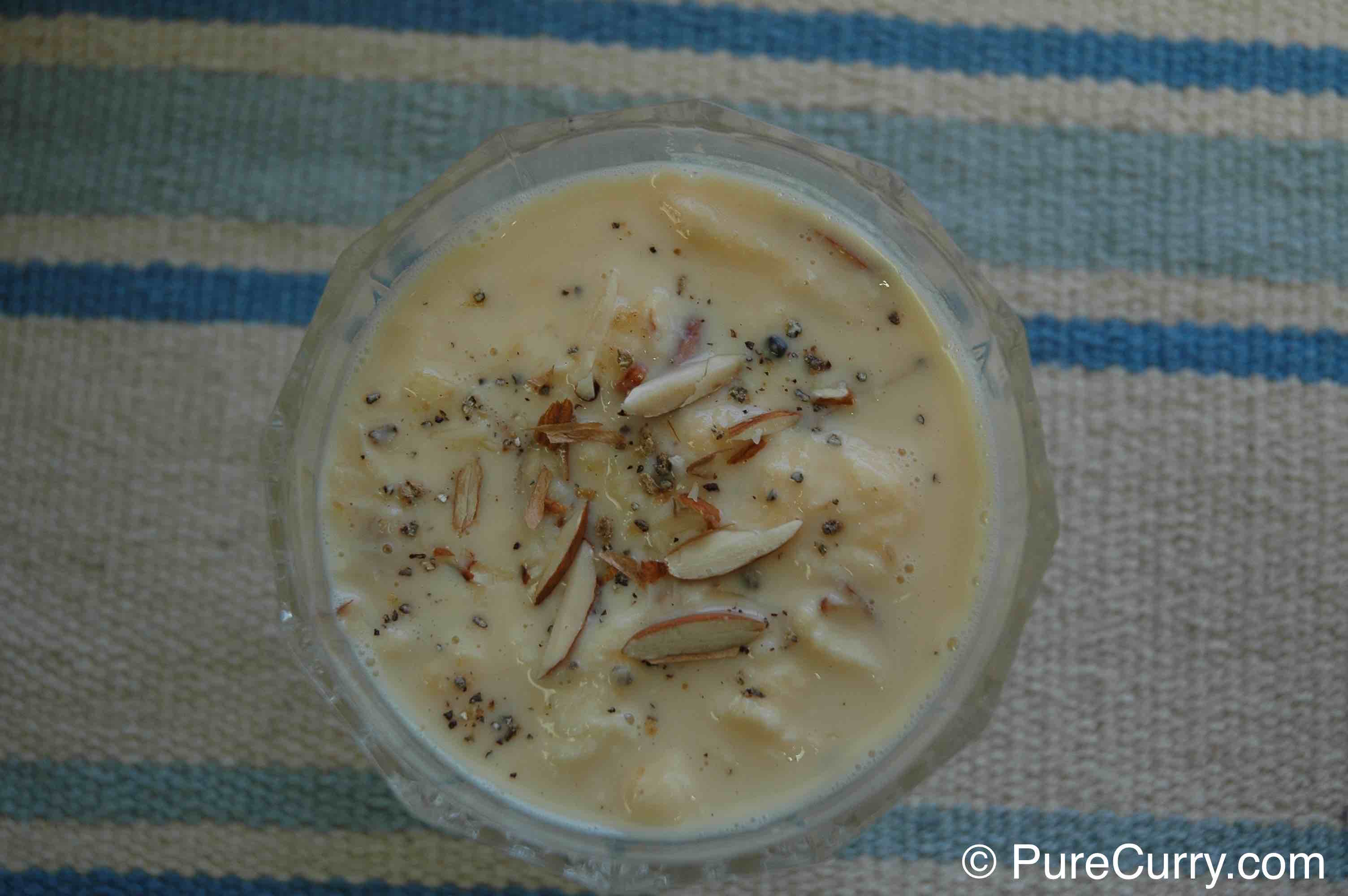
If you enjoy milk-based desserts like this rabri, be sure to check out my recipes for Milk Cake, Rice Pudding, and shrikhand. Each one of these recipes celebrates the richness and versatility of dairy in its own unique way.
Key Tips for Perfect Rabri
- Use whole milk for the best richness and natural cream formation.
- Keep the heat at medium to avoid burning while allowing gradual reduction.
- Avoid over-stirring—those cream layers are essential to authentic texture.
- Be patient—rabri is all about slow cooking and concentration of flavor.

Rabri (Layered Reduced Milk Dessert)
Ingredients
- 3 tbsp Sugar
- 6 cups Whole Milk at least 2% fat milk
- 3 tbsp Slivered Almonds
- 4 Green Cardamoms
- 3 strands Saffron optional
Method
- If starting with whole almonds, soak them in hot water (or microwave in water for ~2 minutes).
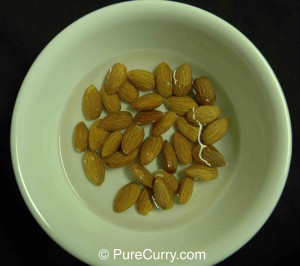
- Drain the hot water and cool the almonds and peel them.
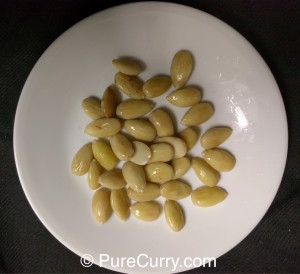
- Slice into slivers using a sharp knife for clean cuts.
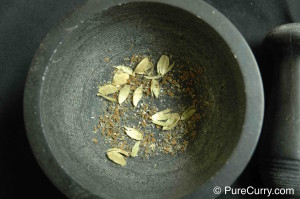
- Crush the pods in a mortar and pestle to release the seeds. Use only the crushed seeds and discard the skins.
- Add the milk to a heavy-bottomed pot and heat over medium heat.
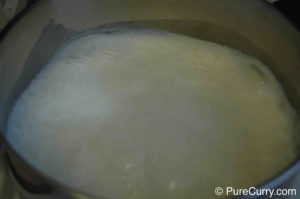
- As the milk heats, a layer of cream will form on top. Gently push this layer to the sides of the pot.

- Continue simmering until the milk reduces to about half its original volume (around 25–30 minutes).
- Stir in the sugar, crushed cardamom seeds (reserve a pinch for garnish), and saffron strands if using.
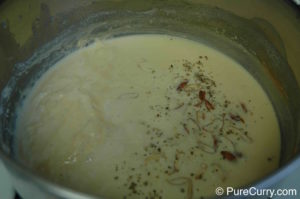
- Keep simmering until the milk reduces to about one-third to one-fourth of its original volume.
- Gently scrape the cream collected on the sides back into the milk.
- Stir in most of the slivered almonds, reserving some for garnish. Mix gently to keep the texture intact.
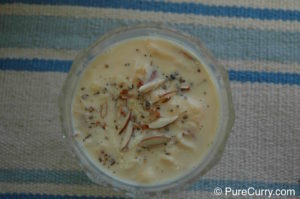
- Serve warm or chilled, garnished with remaining almonds and a pinch of cardamom powder.

Leave a Reply