
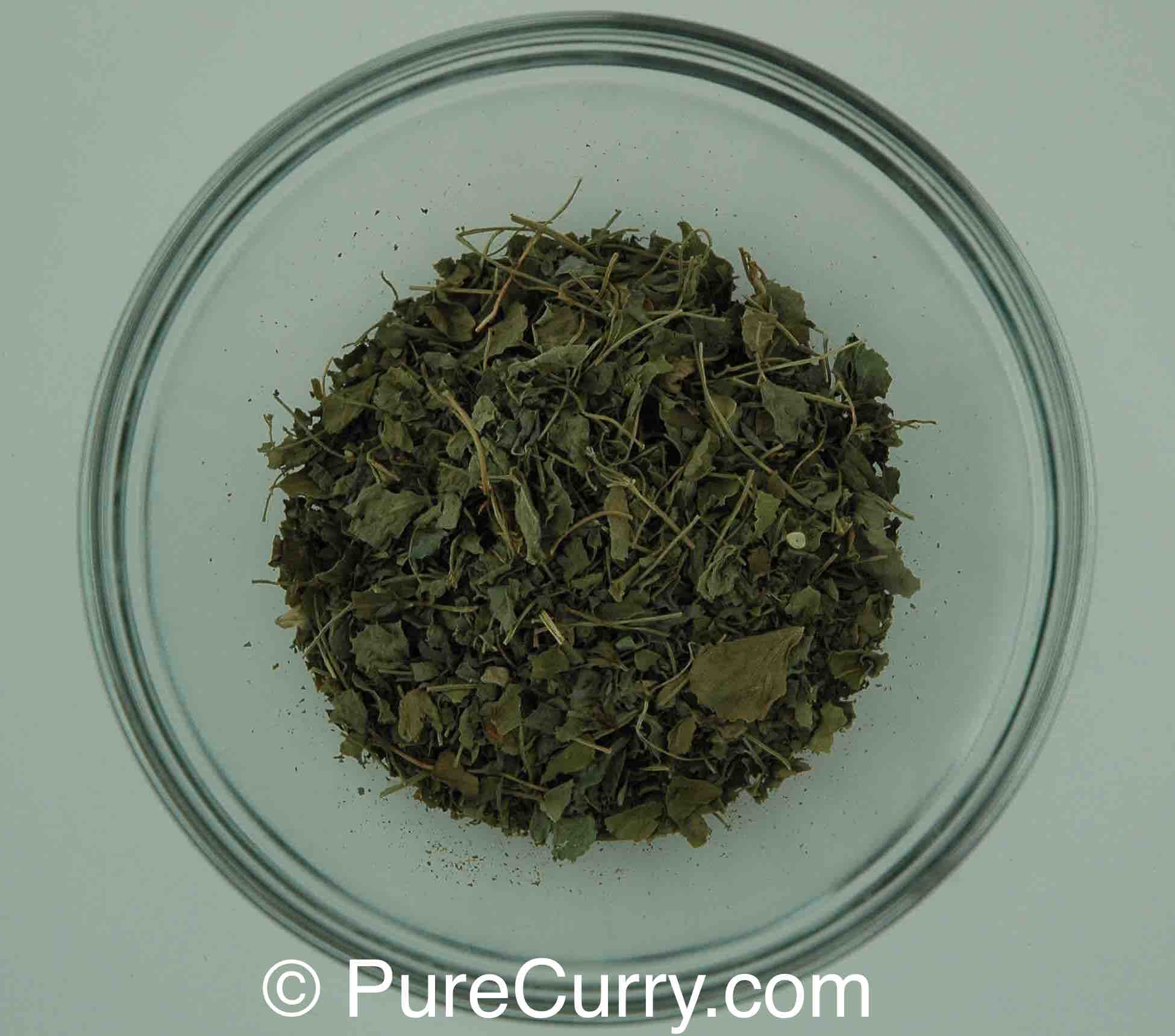
What Are Dried Fenugreek Leaves?
Dried Fenugreek Leaves, known in Hindi as Kasoori Methi, are made by gently drying the tender leaves of the fenugreek plant (methi). While fresh fenugreek leaves are used like a leafy green in Indian cooking, their dried form is something else entirely: concentrated, aromatic, and unmistakable.
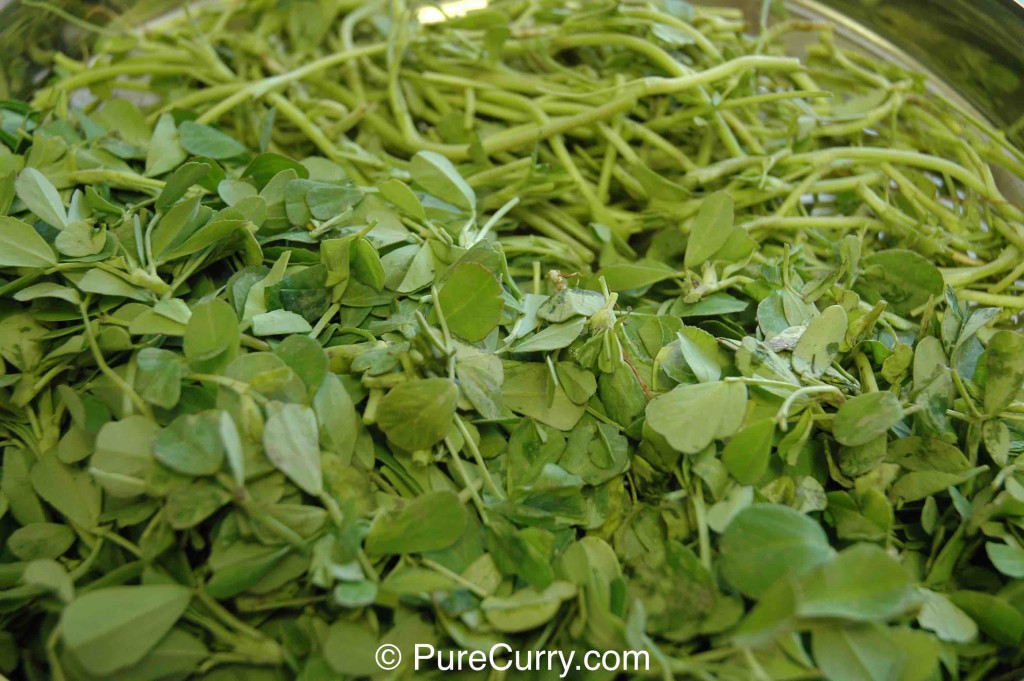
In Indian kitchens, Kasoori Methi is often treated as a finishing spice rather than a bulk ingredient. A small pinch, crushed between your fingers and sprinkled over a dish at the end, can completely transform the aroma and depth of flavor. It’s the kind of ingredient that makes people pause mid-bite and ask, “What is that flavor?” Its aroma in a dish is unmistakable – I perk up when I smell the aroma of Dried Fenugreek Leaves in any dish!
Despite its humble, leafy origins, dried fenugreek leaves are one of those quietly powerful ingredients that experienced home cooks and restaurant chefs alike swear by.
Flavor Profile
On its own, dried fenugreek leaves taste assertively bitter. But that bitterness is deceptive. When added to a cooked dish, especially one containing fat, onions, tomatoes, or cream, it mellows into a complex bitter-sweetness with savory undertones.
The aroma is often described as a mix of:
- Light bitterness similar to chicory
- Sweet hay or maple-like notes
- Subtle hints of celery, fennel seed, and toasted herbs
That balance of bitter and sweet is exactly what makes Kasoori Methi so effective. It adds contrast, rounds out rich sauces, and gives dishes a restaurant-style finish that’s hard to replicate with any other ingredient. While it may remind you faintly of fennel or celery, there is no true substitute for its flavor.
Uses in Indian Cuisine
Dried fenugreek leaves appear across North Indian and Mughlai cooking, often added toward the end of cooking or just before serving. Common uses include:
- Creamy tomato-based gravies like butter chicken, paneer makhani, and shahi dishes
- Dry vegetable dishes (sabzi) where a pinch adds depth without moisture
- Lentil dishes and rich dals
- Flatbread doughs like naan or paratha for subtle herbal notes
- Finishing spice after tadka or just before garnishing
Because the flavor is so concentrated, restraint matters. Too little and you miss the magic; too much and the bitterness can dominate.
The Secret Ingredient in the Indian Kitchen
In many Indian households, Kasoori Methi is the secret step that isn’t written down. It is often used for its aroma and not just for how it improves the taste. Restaurant cooks often add it off-heat, just before plating, knowing that its aroma is as important as its taste.
It’s also one of those ingredients people don’t notice until it’s missing. Make the same curry twice – once with dried fenugreek leaves and once without – and the version with Kasoori Methi will always taste more complete.
Should You Toast Dried Fenugreek Leaves?
Lightly toasting dried fenugreek leaves (Kasoori Methi) is optional, but it does influence how they taste and behave in a dish. Toasting enhances aroma, softens sharp bitterness, and shifts the flavor toward warmer, nutty notes. That said, whether to toast or not depends largely on how the leaves will be used.
When Toasting Is Helpful
- When using Kasoori Methi as a finishing spice.
- When you want a stronger, more immediate aroma.
- When the leaves feel slightly leathery or hard to crush.
- When aiming for a rounded, restaurant-style finish.
In these cases, toasting releases aromatic compounds and makes the leaves easier to crumble finely, allowing their flavor to bloom instantly when added at the end of cooking.
When Toasting Isn’t Necessary
- When adding the leaves directly to a simmering sauce or gravy.
- When the dish will cook for several minutes after adding them.
In a hot, liquid-based dish, dried fenugreek leaves naturally hydrate and release their flavor over time. Heat, moisture, fat, and acidity in the sauce already mellow bitterness and extract aroma, so toasting beforehand has a smaller impact.
Dried Fenugreek Leaves
Method
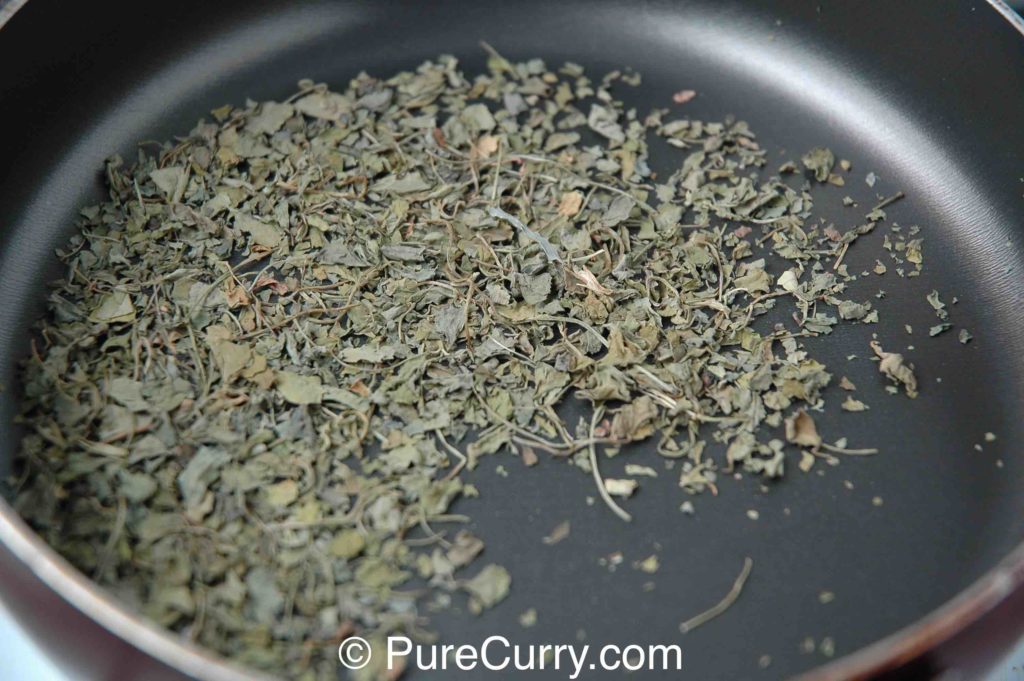
- Heat a dry pan over low heat (no oil).
- Add the dried fenugreek leaves in a thin layer.
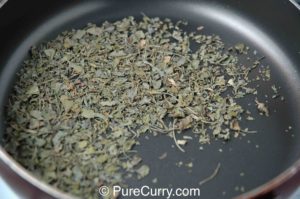
- Stir constantly for 20 to 40 seconds, just until fragrant.
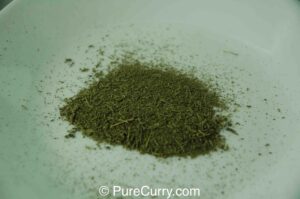
- Remove immediately from the pan and transfer to a plate to cool.
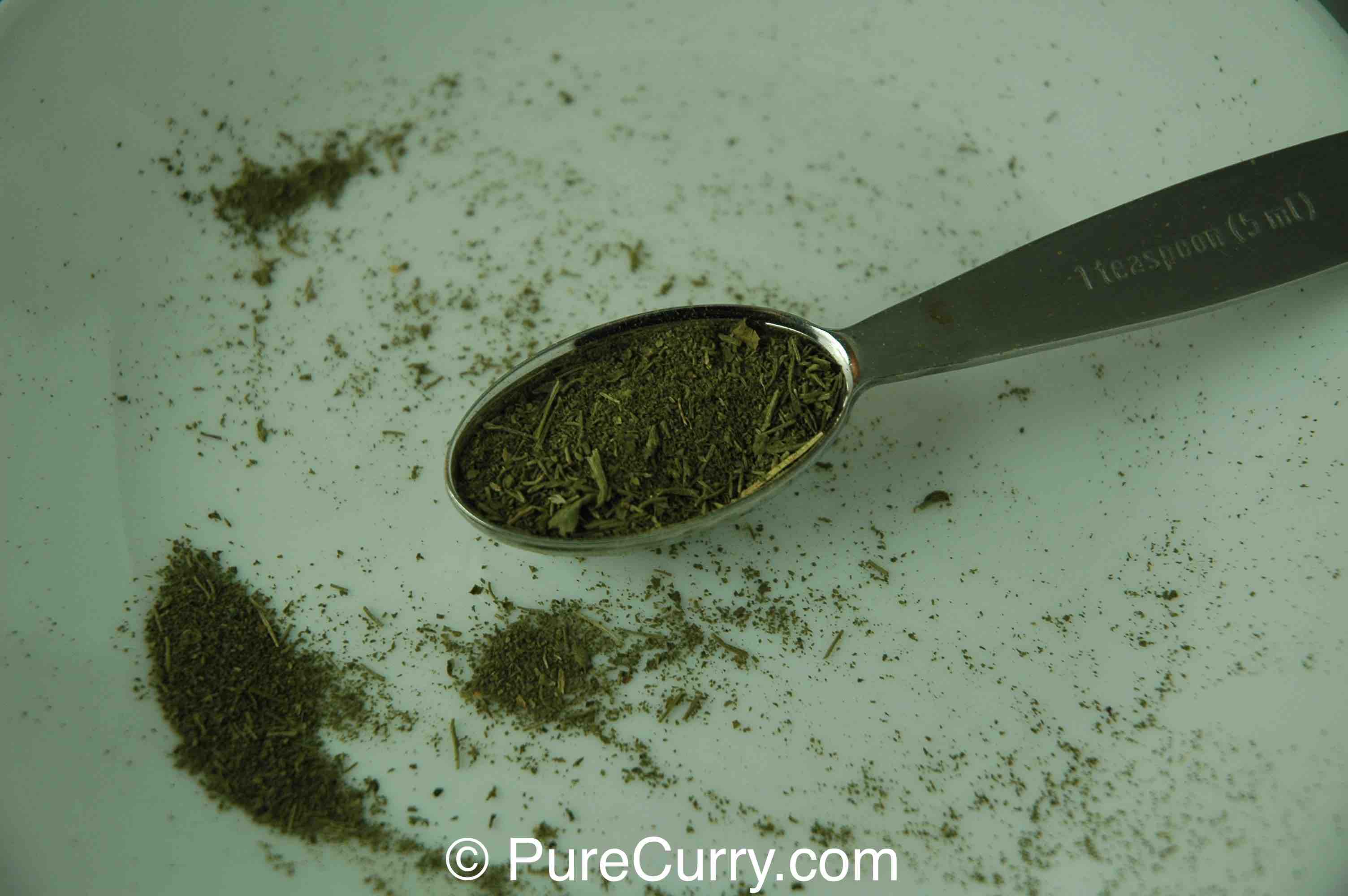
- Once cooled, crush between your fingers or palms before using.

Leave a Reply