
This recipe is part of a series of sauce recipes. Preparing the sauce or the paste that creates the foundation of the flavors for the finished dish is often the first step. Learn to cook a sauce and you can prepare a wide range of recipes with a variety of ingredients – meat, vegetables, paneer, potatoes, etc. The sauce is a canvas for your creative expression, and I encourage you to deviate from the recipe and vary the selection and quantities of the spices, to develop a unique recipe for your personal taste.
The Foundation of Many Indian Curries
When I first moved to the United States, I survived on microwave dinners and fast food. After a few months, the cravings for homemade Indian food became impossible to ignore. That’s when the long-distance cooking lessons began — extended phone calls with my mother, notebook in hand, learning the fundamentals.
She taught me two essential techniques that transformed my cooking:
- A basic onion–tomato curry sauce
- A standard spice mix for vegetables
I’ll cover the vegetable spice mix in another post. This post focuses on the curry base — the quiet workhorse behind countless Indian dishes.
There are always variations — some dishes require additional spices, others omit a few — but this foundational sauce is the starting point for a wide range of Indian curries.
This simple sauce forms the backbone of many North Indian dishes. With just a handful of ingredients — onions, tomatoes, ginger, garlic, and spices — you create a deeply flavorful base that can be adapted into:
- Chicken curry
- Lamb or goat curries
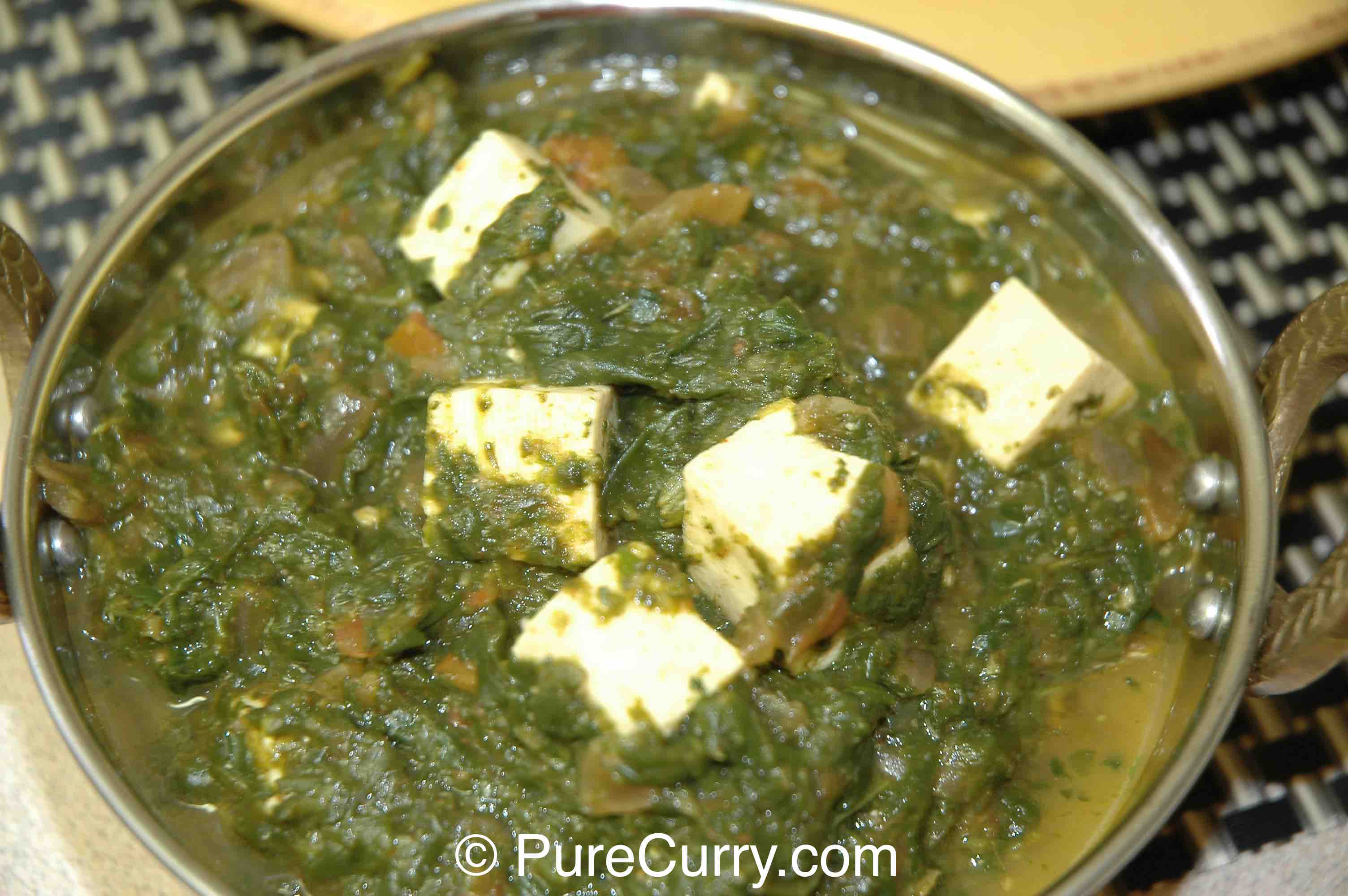
- Vegetable dishes
- Lentil preparations
- Seafood curries
Mastering this base gives you flexibility. Once it’s ready, turning it into a complete dish becomes fast and intuitive.
Patience is Key
It took me many attempts to get this recipe right. My biggest mistake was being overly cautious.
- I didn’t cook the onions long enough before adding tomatoes.
- I added ginger and garlic too late, leaving a raw taste.
These are my key tips for getting this sauce right.
Browning the Onions
Cook the onions until they turn golden brown to develop sweetness and depth. If you rush this step, the entire sauce will taste flat.
Cooking the Ginger and Garlic
Ginger and garlic must be cooked long enough to lose their raw sharpness. Add them after the onions are browned and cook until fragrant and lightly golden.
Let the Tomatoes Break Down
Once tomatoes are added, cook them until they soften completely and the oil begins to separate slightly from the mixture. This indicates that the moisture has reduced and the base has concentrated.
The Role of Spices
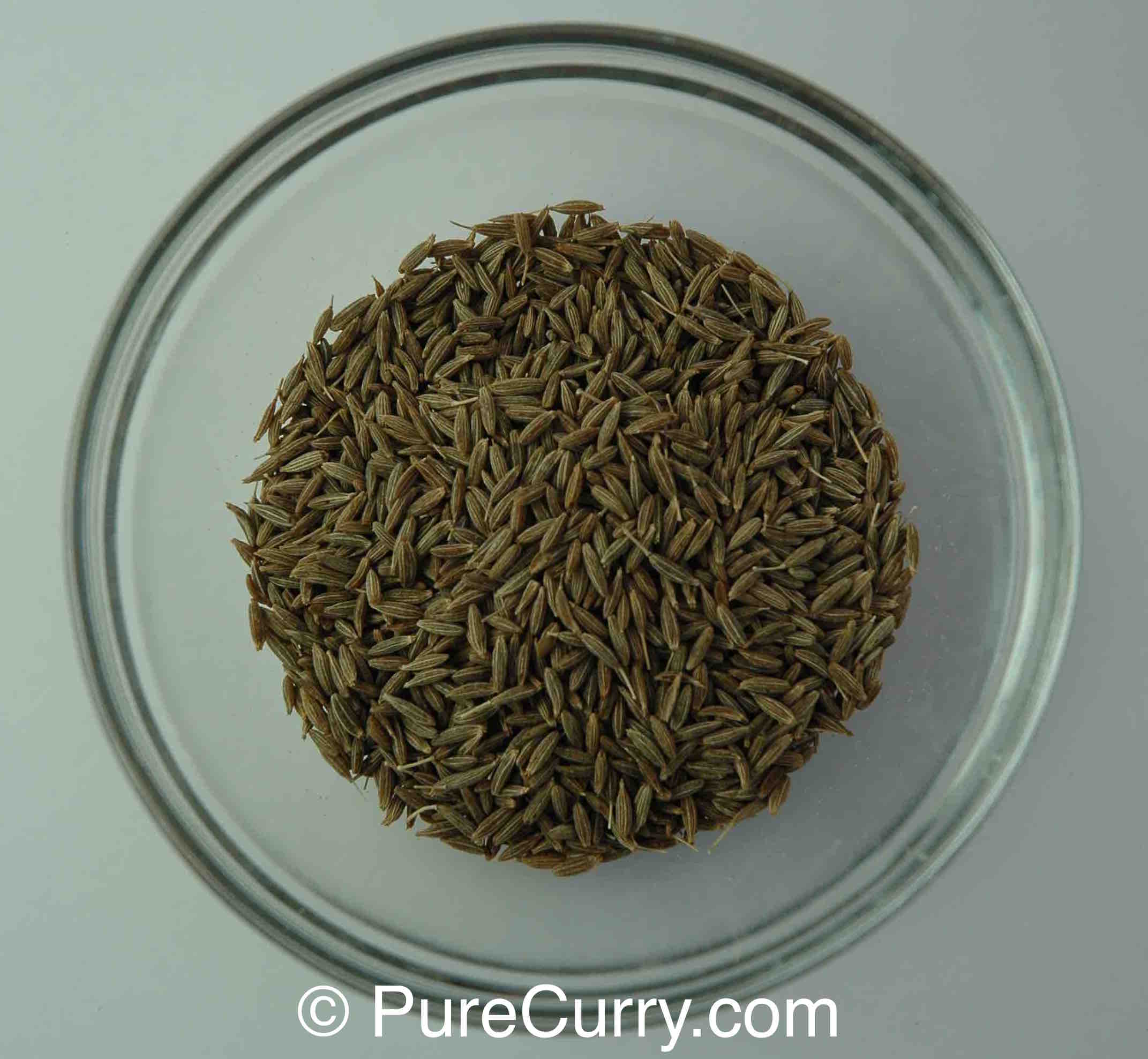
A classic way to begin is by sizzling cumin seeds in hot oil. This technique, known as tadka, releases essential oils and creates a deeply aromatic base. I’ve written a separate post explaining how to properly temper cumin seeds – Blooming Cumin Seeds: The Perfect Sizzle.
Other ground spices are typically added after the ginger and garlic, allowing them to bloom briefly in the oil before tomatoes are introduced.
Texture and Consistency
This curry base can be left slightly chunky or blended into a smooth sauce, depending on the dish you’re preparing.
- For rustic home-style curries, leave it as is.
- For restaurant-style gravies, blend until smooth.
If the mixture becomes too thick while cooking, add small amounts of water to maintain a saucy consistency — but avoid making it watery.
Simplicity and Convenience
This recipe is very flexible. Feel free to experiment with variations, that is, adjust the quantity of the individual spices or the proportion of the onions and tomatoes to suit your taste. One of the best things about this curry base is how well it stores.
- Refrigerator: Keeps well for several weeks in an airtight container.
- Freezer: Stores for several months. Portion into small containers for convenience. When you’re ready to cook, simply thaw and add your protein or vegetables.
Since the base is already cooked, you typically don’t need to add additional oil, but adding a bit of oil can help the cooking process depending on your star ingredient for the dish you’re preparing.
Also, if your recipe calls for whole spices such as cloves (laung), cardamom(elaichi), or cinnamon (dalchini), heat a small amount of oil first, fry the whole spices until fragrant, and then add the prepared curry base.
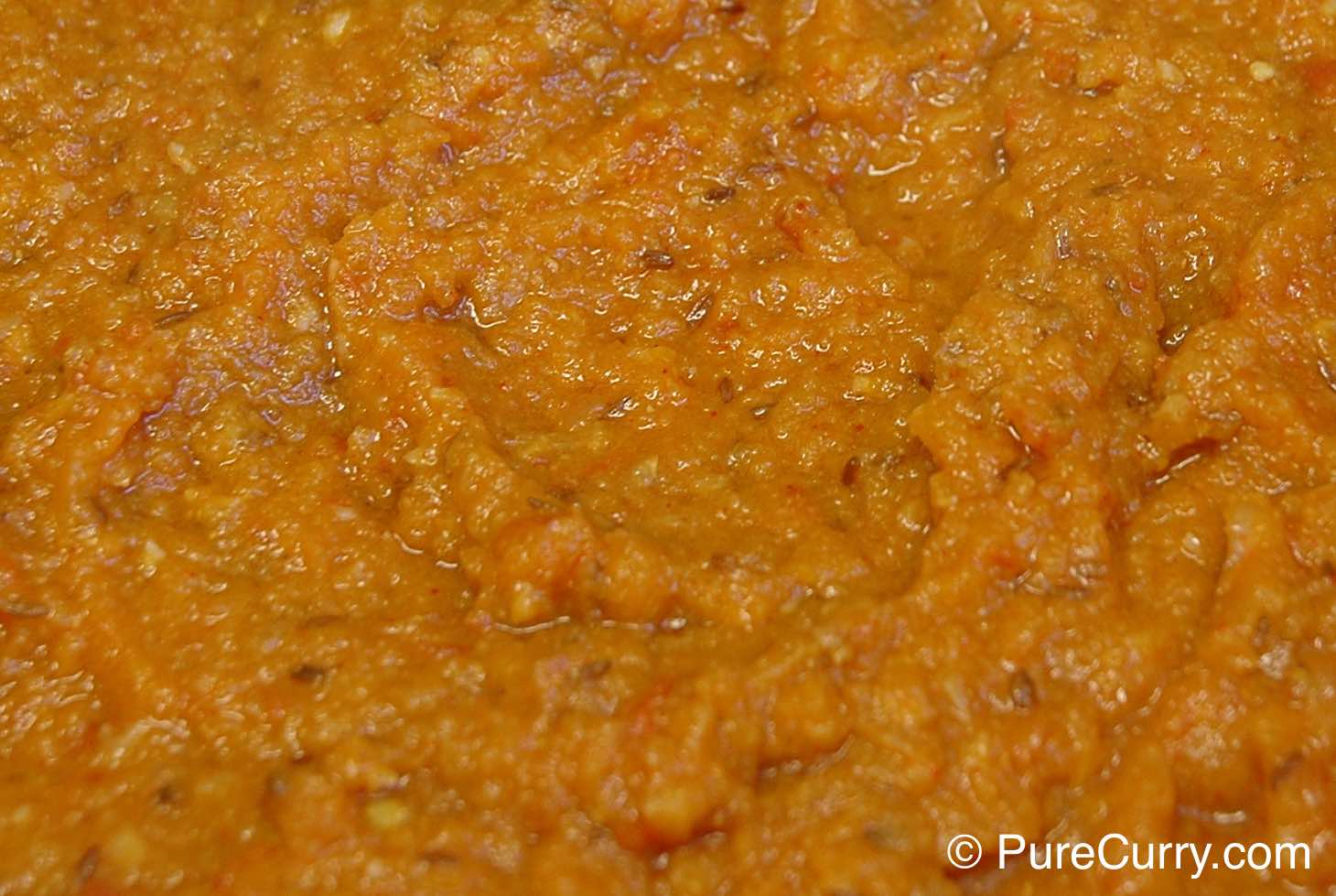
Basic Curry Sauce (Onion-Tomato Masala)
Ingredients
- 3 cups Onions Can be pureed, grated or finely diced.
- 1.5 cups Tomatoes Crushed or chopped
- 1 tbsp Ginger-garlic paste
- 2 Green Chilies Optional, adjust based on your preferred heat level
- 3 tbsp Oil Approximately 1 tbsp per cup of onions used
- 1/2 tsp Cumin Seeds
- 1.5 tsp Kashmiri Red Chili Powder Use Cayenne Pepper if you want it hotter
- 1 tsp Garam Masala
- 1/2 tsp Turmeric Powder
- 2 tsp Coriander Powder
Method
- Prepare the onions by crushing in a blender, grating or finely dicing them. The pureed/grated onions make the sauce silkier as compared to using the diced onions.
- Crush the tomatoes in a blender or use crushed tomatoes from a can.
- Heat the oil in a pan on medium heat and the Cumin Seeds.1/2 tsp Cumin Seeds, 3 tbsp Oil
- When the Cumin Seeds start to crackle add the Ginger-Garlic paste and fry it until it turns golden brown (about 1 minute).1 tbsp Ginger-garlic paste
- Add the onions and fry until golden brown stirring frequently (about 15-20 minutes).3 cups Onions
- Lower the heat and add all the spices, except for the Garam Masala which will be added at the end. We cook the spices briefly at this point to allow them to flavor the oil, before adding the tomatoes.2 Green Chilies, 1.5 tsp Kashmiri Red Chili Powder, 1/2 tsp Turmeric Powder, 2 tsp Coriander Powder
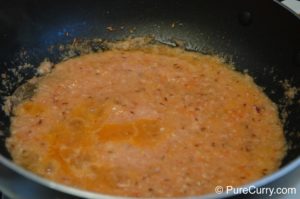
- Add the tomatoes and minced green chilies1.5 cups Tomatoes
- Cook on medium heat, stirring frequently, until the oil starts to separate out (about 15 minutes). Add the Garam Masala and mix it into the sauce.1 tsp Garam Masala
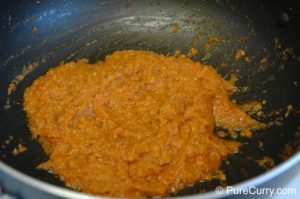
- When cooking any dish with this sauce, you would add the ingredients at this point and cook them in the sauce, and finally adjust the consistency by adding water or broth (if you prefer). Take care to not make the sauce too watery or it will taste very bland.TIP: If you're cooking a meat dish such as Chicken Curry, add the chicken before adding the tomatoes. This is because the acid in the tomatoes will make the outside of the chicken tough making it hard to cook it. Once you've cooked the outside of the chicken you can add the tomatoes and continue with the rest of the process.
Leave a Reply