
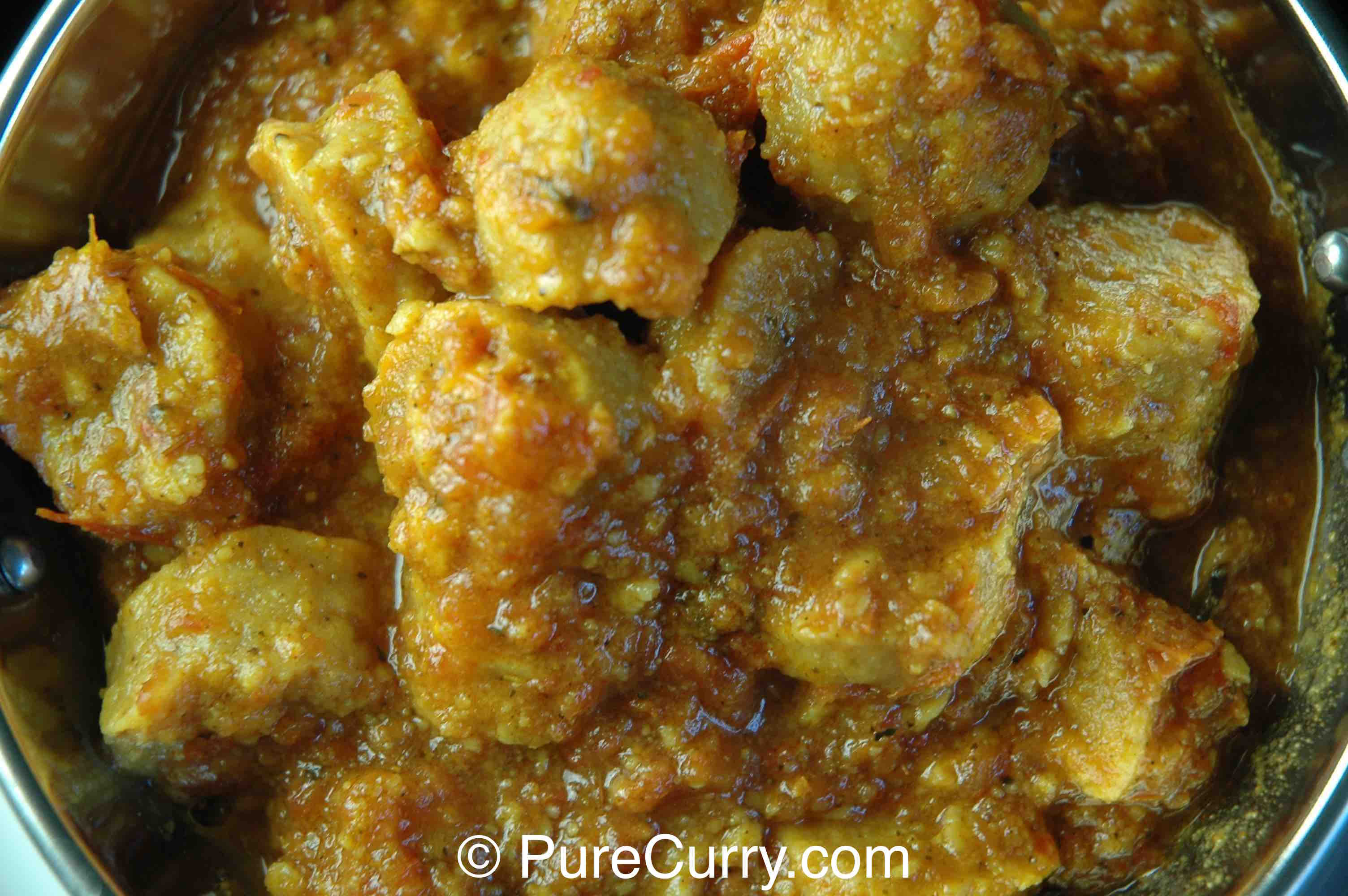
Besan ke Gatte, or Gram Flour Dumplings, in a simple masala sauce is another dish on my list of all-time favorites. Frankly, I believe that every dish prepared with gram flour is delicious; it doesn’t matter if gram flour is only the coating on the main ingredient, such as in fritters, or it is the main ingredient itself, such as in Punjabi Kadhi (and a traditional Punjabi Kadhi also has fritters!). Besan ke Gatte is no exception.
The recipe for Besan ke Gatte, or Besan ke Dakre as we called it in my parents’ dialect Multani, was unfortunately not in the recipe book I had jotted down from my mother. However, I was able to recreate it almost exactly how my mother prepared it, with the help of my sister. This recipe includes clips from a video I recorded with her one time while preparing this recipe.
Recipe Note on Digestibility
Moving on to the recipe, I would like to point that that while Gram flour (besan) is nutritious and flavorful, it can feel heavy on digestion for some people – especially if you’re not used to it or eat it in large quantities. Traditional Indian cooking often balances besan with digestive spices, and this dish is no exception.
In my Besan ke Gatte, I add ajwain (carom seeds) to the dumplings and asafoetida (hing) to the sauce. Both are classic digestive aids that help make legume-based dishes easier on the stomach.
Traditionally, the gravy for this dish includes yogurt and additional gram flour. To keep the dish lighter and more balanced, I prefer a Basic Onion-Tomato Masala instead. The flavor is still deeply satisfying, especially with the addition of the gatte cooking water, which adds body and depth to the sauce without extra heaviness.
Pitfalls
Kneading the dough
The first time ever, actually more like, the first few times that I attempted to make a dough with gram flour, I ended up with a sticky mess. I added too much water, and to correct that, I added more gram flour, but a bit too much and so had to add more water. I ended up spending over 20 minutes kneading the dough, and it was extremely frustrating. You get the idea.
To get the dough right the first time, you must add water v e r y g r a d u a l l y , that is in small quantities, and mix the dough well. I recommend using your hand, instead of a spatula, to mix the dough. That way, you have a good feel for how the dough is coming along. This will ensure you get it right the first time, and the dough will be ready in just a couple minutes. TIP: You may want to wash your hands right after you prepare the dough, because the gram flour hardens quickly, and then does not come off easily.
Boiling the Dough Cylinders
When boiling the dough cylinders, the water must be already boiling, otherwise if they sit in room temperature water while it heats up, they may break up.
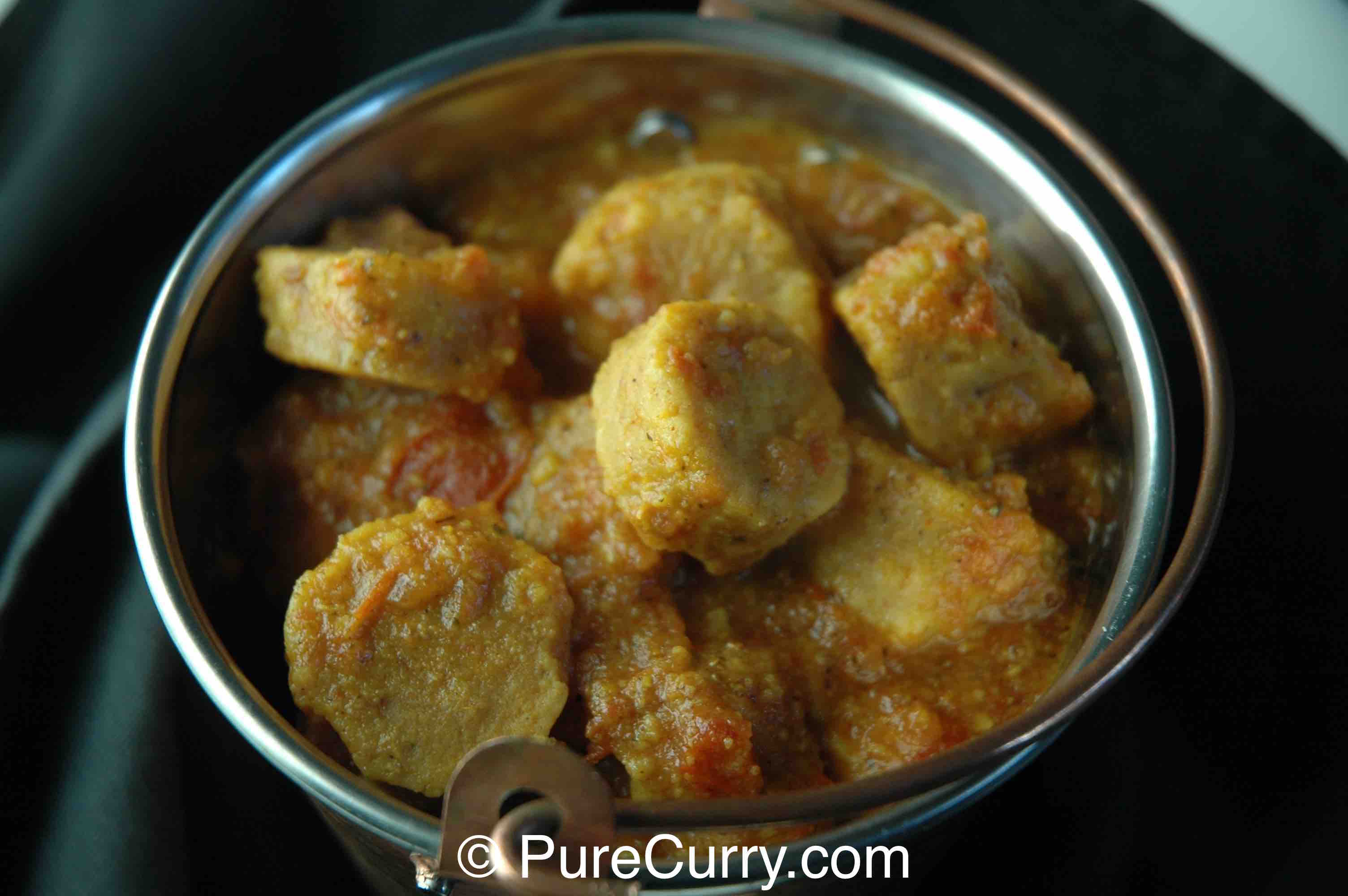
Gram Flour Dumplings (Besan ke Gatte)
Ingredients
- 1.5 cup Gram Flour Besan
- 1/2 tsp Ajwain
- 1/2 tsp Red Chili Powder
- 1 tsp Coriander Powder
- 1/2 tsp Garam Masala
- 1 tsp Fennel Seeds coarsely crushed
- 2 tbsp Oil
- 3/4 tsp Salt
- 1/2 cup Water
- 1 Onion medium size, coarsely chopped
- 1 Tomato medium size, coarsely chopped
- 1/2 inch Ginger peeled
- 3 cloves Garlic
- 1/2 tsp Turmeric
- 1 tbsp Coriander Powder
- 1/2 tsp Garam Masala
- 1 tsp Dried Fenugreek Leaves kasoori methi
- Pinch Asafetida hing
- 1/2 tsp Salt adjust to taste
- 1 tbsp Oil
Method
- Add all the ingredients for the dumplings, including the oil, in a mixing bowl.
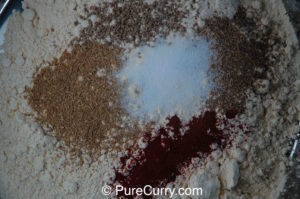
- Mix the ingredients together and then gradually add water and mix it with your hand. Run your fingers through the flour like a claw, and scrape off any flour stuck on the side of the mixing bowl.
- The end result you are looking for is a ball of dough.
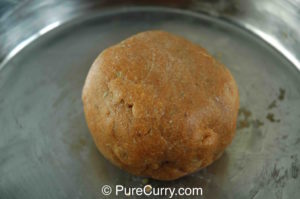
- Divide the dough into 6 equal sized balls.
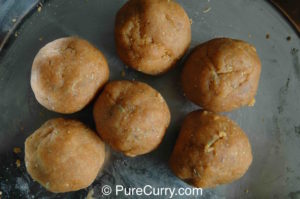
- Roll each ball on a flat hard surface, such as the kitchen counter or a cutting board, to make a cylinder roughly 1.5 cm thick. When rolling, apply a bit of oil or water on the surface of the dough ball as needed.

- Repeat and finish making the cylinders with the dough.

- Bring a pot of water to boil on medium high heat. Put the dough cylinders into a pot of boiling water, side-by-side; do not pile them on top of each other. Keep about 1 inch of water above the dough cylinders.
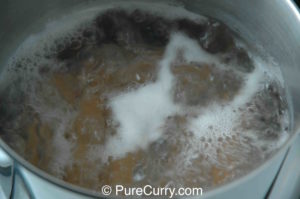
- Boil the dough cylinders for 10-15 minutes, or until they float up to the surface.

- Turn off the heat and remove them onto a plate with a pair of tongs.

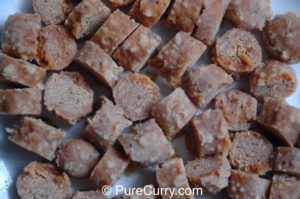
- Once the dough cylinders have cooled a bit, cut them into bite-sized discs. The dumplings are ready to be added to the sauce. Next we'll prepare the sauce.
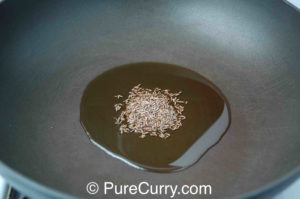
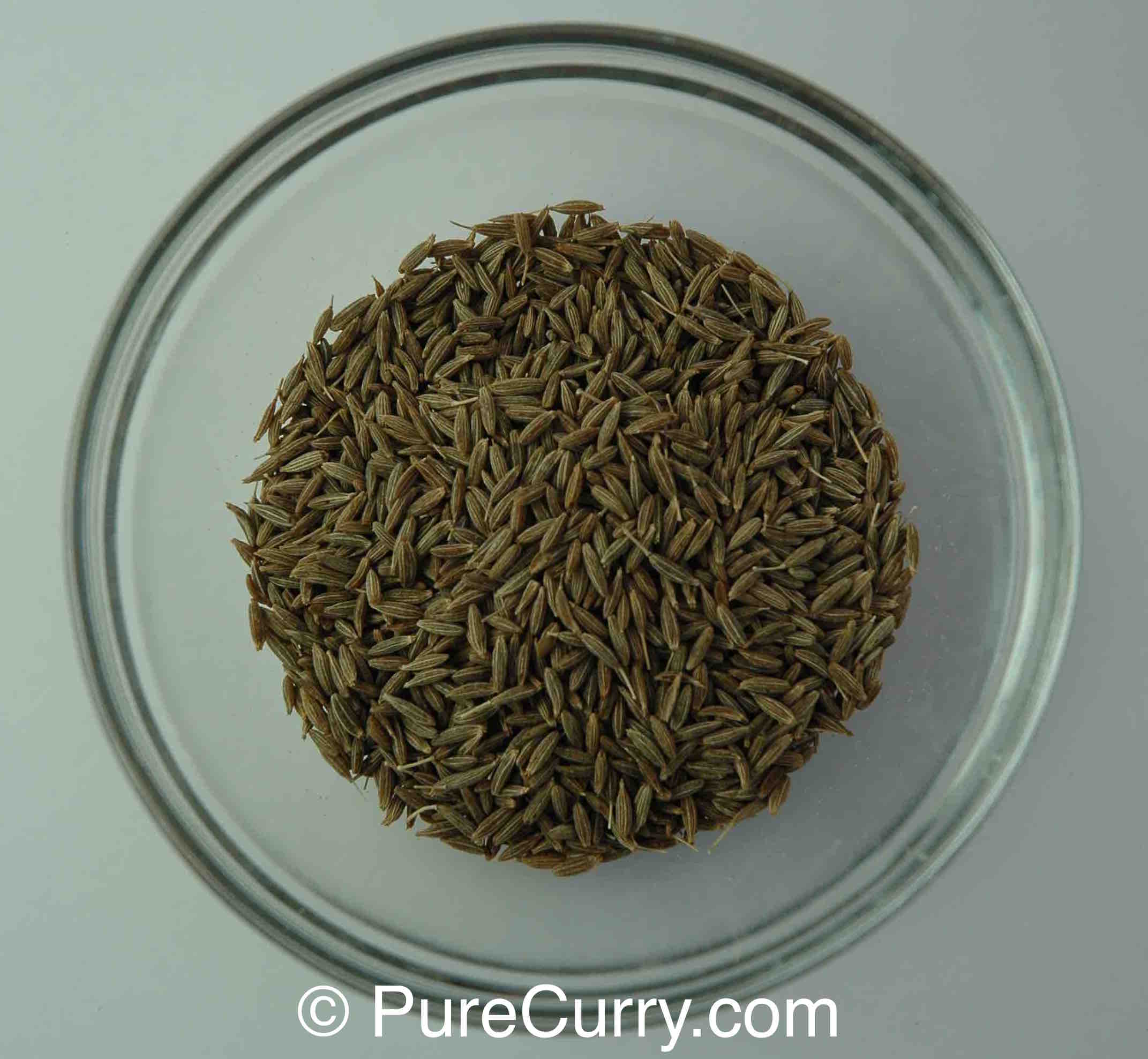
- Heat 1 tbsp oil in a heavy-bottomed pan on medium heat; once the oil is hot, then add the Cumin Seeds – the seeds should sizzle right away.
- Add the Asafetida (Hing) and fry it for a bit and then add the Onion, Tomatoes, Ginger, Garlic & Green Chilies masala, along with the Coriander Powder, Turmeric, Dried Mango Powder (Amchur) and about 1/2 tsp Salt and mix well.
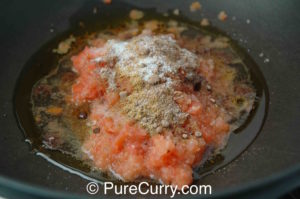
- Cook, stirring occasionally, until the liquid dries up and the oil starts to separate out of the masala, indicating that it is cooked. If the pan starts to dry up, you can add a little hot water.
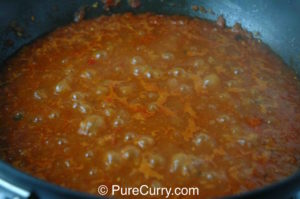
- This can take up to 10-15 minutes or longer depending on the quantity you are working with.
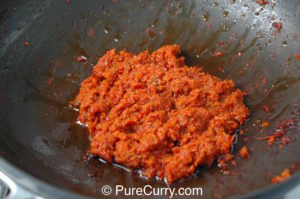
- Add the dumplings into the pan.
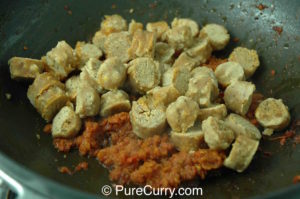
- Toss well to coat them with the masala and let it cook for a few minutes.
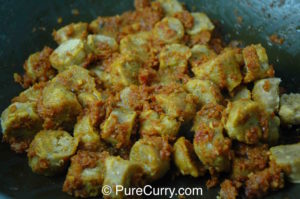
- Add the rest of the water used to boil the dumplings.
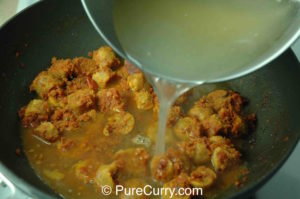
- Simmer for about 6-8 minutes.

- When the desired consistency of the sauce is reached, sprinkle some Garam Masala and crushed Dried Fenugreek Leaves and mix them in.

- Gram flour Dumplings (Besan ke Gatte) is ready. Enjoy with steaming hot Basmati Rice.

Leave a Reply