
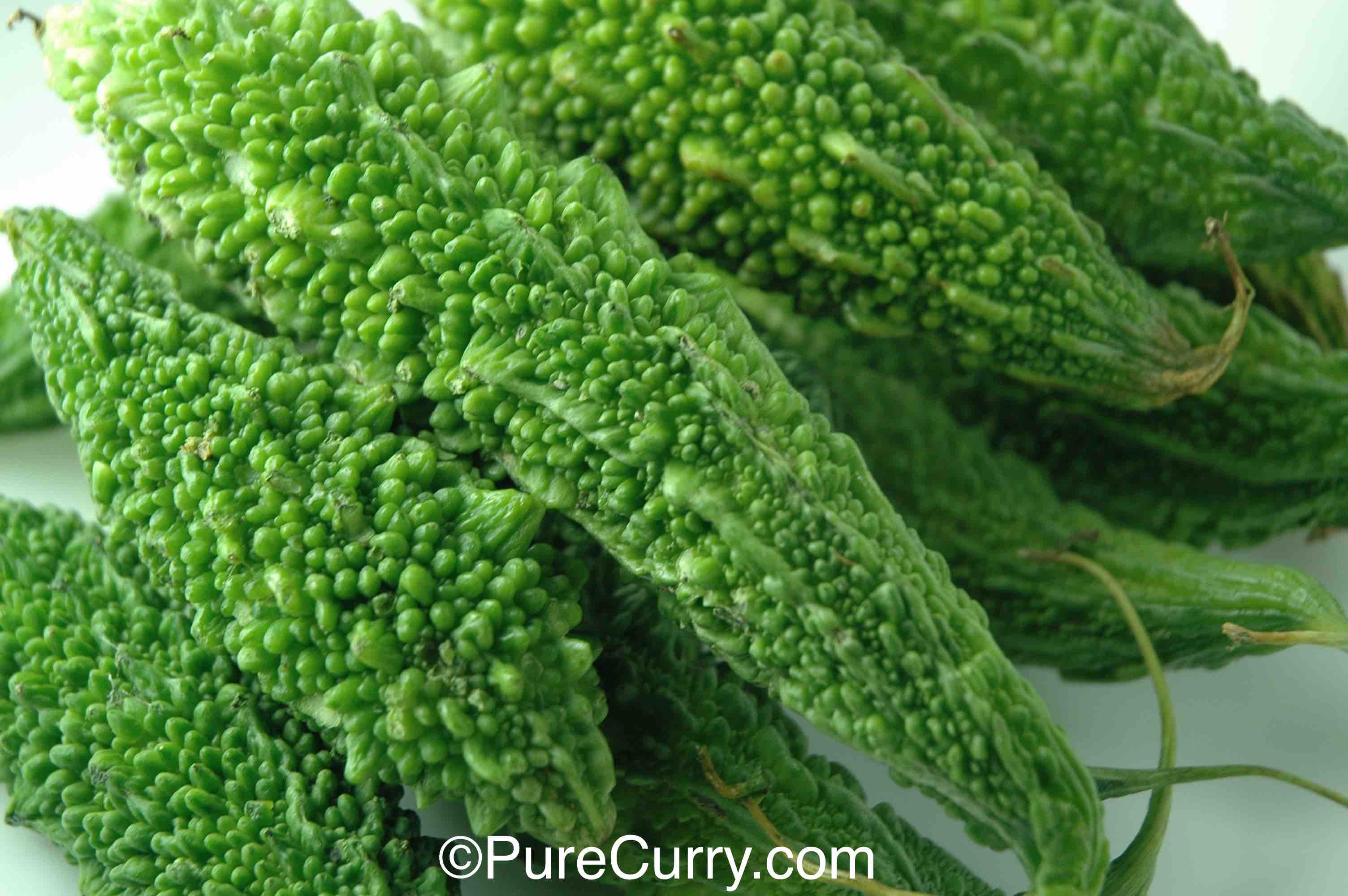
Welcome to The Mastering Bitterness Series, where we explore the science of Bitter Gourd (Karela).
In this 3-part masterclass, we apply the Learn. Create. Savor. philosophy to the most polarizing ingredient in the Indian kitchen: Karela (Bitter Gourd). We explore the biology, physics, and chemistry behind Karela to help appreciate what you need to do, to get the best results.
Part 1 (Learn) – The Biology of Bitterness: Understanding why karela tastes the way it does, and why that matters.
Part 2 (Create) – How to Reduce Bitterness in Karela: What salting, squeezing, and cooking actually do.
Part 3 (Savor) – The Alchemy of Flavor: Balancing bitter, sweet, sour, and fat to make karela crave-worthy.
Understanding Karela and Why It’s Bitter
Why does karela provoke such an immediate, almost instinctive reaction? In this opening post, we start by understanding the ingredient itself, before ever stepping into the kitchen. From its identity as a member of the gourd family to the role bitterness plays as a natural defense mechanism, this article explains why karela demands a different approach than most vegetables.
Rather than framing bitterness as a flaw, this post shows how it’s built into the plant’s biology and how that same bitterness connects to karela’s long-standing reputation in traditional food cultures. You’ll also learn how variety, age, and freshness influence flavor, and why choosing the right karela at the market makes everything that follows easier.
What Is Karela, Really?
At first glance, karela looks like a vegetable – and in the kitchen, that’s how we treat it. But botanically, it’s closer to fruits like cucumber, squash, and melon than to leafy greens or roots. That family resemblance matters, because it helps explain karela’s structure, moisture content, and the way it reacts to heat and seasoning.
When shopping, you’ll usually see two distinct types. Knowing which one you’re holding makes a real difference to how you cook it.
Indian Karela
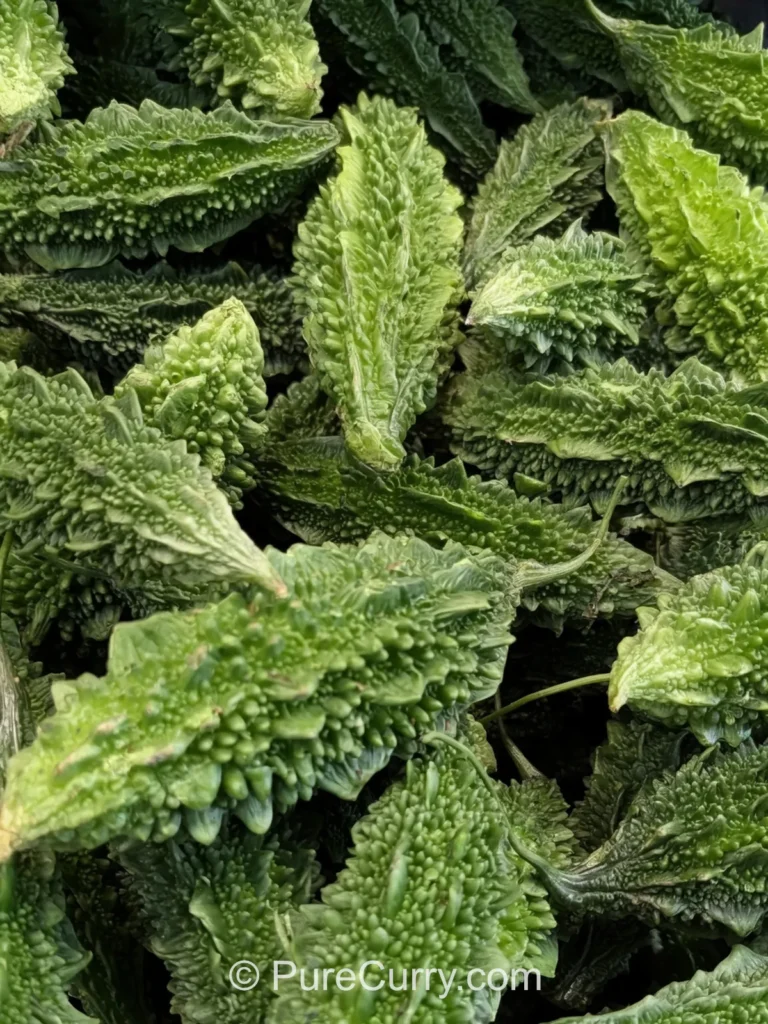
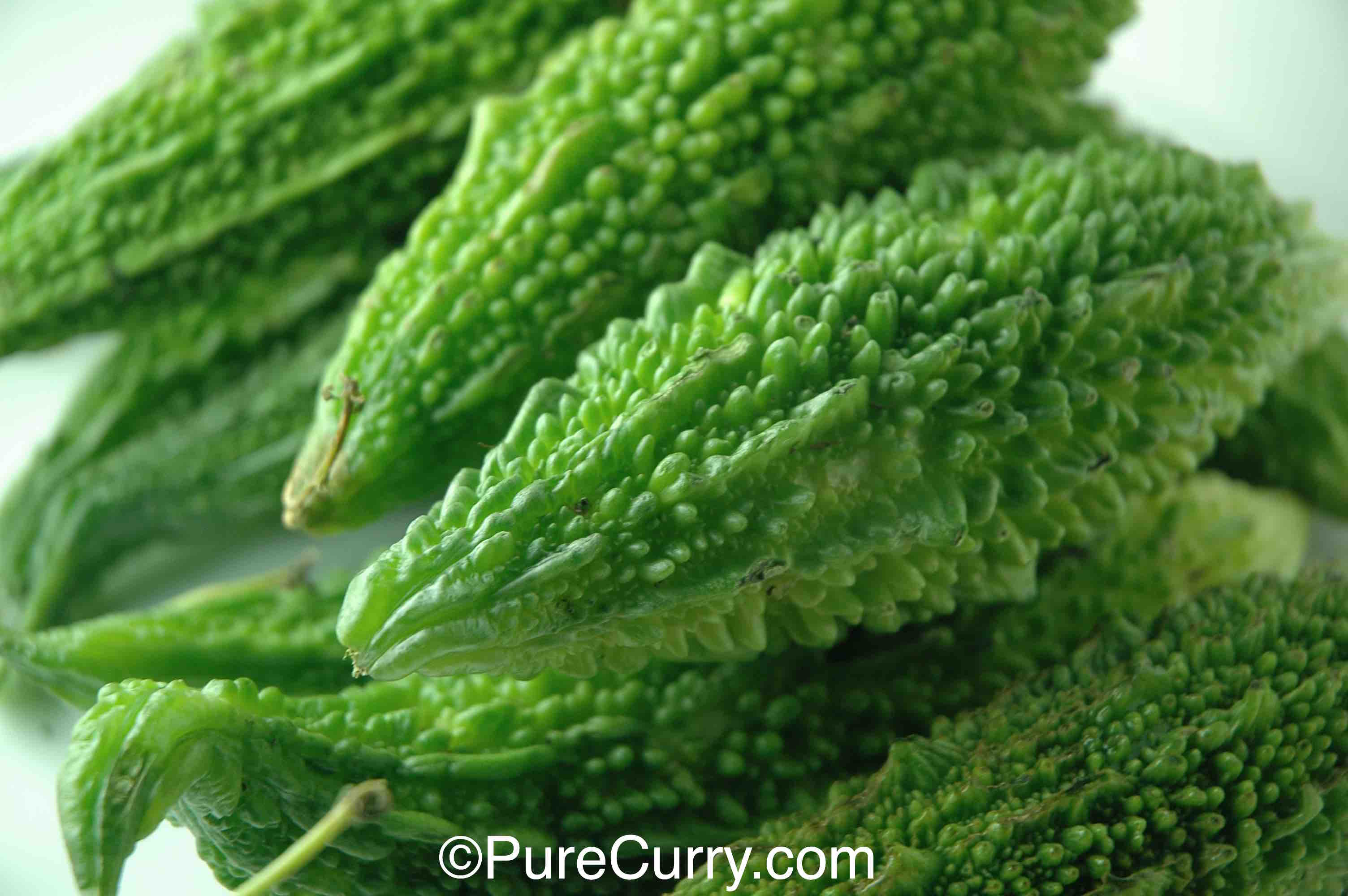
This is the variety most commonly used in Indian cooking. It’s narrow, dark green, and covered in sharp, jagged ridges. Its skin is thicker, its flesh is firmer, and its bitterness is bold and concentrated. This intensity is exactly why traditional Indian recipes rely on careful preparation and strong flavor partners.
Chinese Bitter Melon
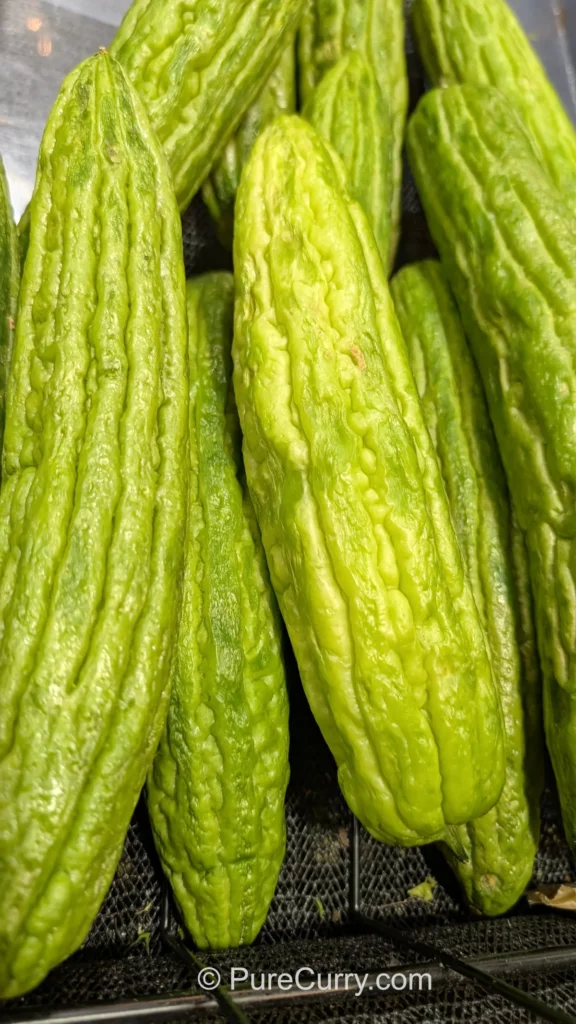
This variety is longer, wider, and much paler in color. Instead of sharp ridges, it has smooth, rounded bumps. It contains more water and tends to taste slightly milder, especially when young. Dishes made with this variety often lean toward quicker cooking and lighter seasoning.
🧪The Science: Botanical Classification of Karela
The Botanical Identity of Karela
Karela is scientifically known as Momordica charantia. Despite being treated as a vegetable in cooking, it is technically a fruit, because it develops from the flower of the plant and contains seeds.
It belongs to the Cucurbitaceae family—the same plant family as cucumber, squash, pumpkin, and watermelon. Members of this family tend to share certain traits: high water content, fast-growing vines, and sensitivity to heat and moisture during cooking.
Understanding karela as part of this family explains several things cooks notice instinctively:
- Why its bitterness concentrates near the skin and seeds
- Why it softens quickly once salted
- Why it releases water during cooking
Why Is Karela So Bitter?
Bitterness isn’t an accident – it’s a strategy.
In the natural world, bitter flavors act as warning signals. Long before humans learned to cook, bitterness helped animals decide what was safe to eat and what to avoid. When something tastes sharply bitter, the instinctive reaction is to stop chewing.
Karela leans heavily into this defense. Its bitterness exists to protect the fruit while its seeds mature. When you bite into raw karela and immediately recoil, you’re responding exactly as nature intended.
This is also why karela behaves differently from most vegetables. You can’t simply sauté it and hope for the best. The bitterness is built in, and unless you actively manage it, it will dominate the dish.
In the next post, we’ll look closely at how traditional preparation methods weaken this natural defense. But first, there’s an important question to answer:
Why do people choose to eat karela at all?
🧪The Science: Bitter Compounds as Plant Defense
Why Plants Use Bitterness as a Defense
Karela is scientifically known as Momordica charantia. Despite being treated as a vegetable in cooking, it is technically a fruit, because it develops from the flower of the plant and contains seeds.
It belongs to the Cucurbitaceae family—the same plant family as cucumber, squash, pumpkin, and watermelon. Members of this family tend to share certain traits: high water content, fast-growing vines, and sensitivity to heat and moisture during cooking.
Understanding karela as part of this family explains several things cooks notice instinctively:
- Why its bitterness concentrates near the skin and seeds.
- Why it softens quickly once salted.
- Why it releases water during cooking.
Why Karela Has a Long Reputation for Health
🧪The Science: The Active Compounds in Karela
What Makes Karela Biologically Active
Karela’s effects on blood sugar come from a combination of naturally occurring compounds that work together rather than in isolation. The most studied include:
- Charantin: A compound shown to support lower blood glucose levels
- Polypeptide-p: Often referred to as “plant insulin” because it mimics some actions of human insulin
- Vicine: A compound that supports glucose regulation through complementary pathways
Rather than acting as a single powerful agent, these compounds form a biochemical “cocktail,” which helps explain why whole karela behaves differently than extracts or supplements.
Across many food cultures, karela has been valued not just as food, but as something closer to functional nourishment. You’ve likely heard it described as “good for blood sugar” or recommended for people watching their glucose levels.
This reputation isn’t folklore alone. The same compounds that make karela bitter also interact strongly with how the body processes sugar. Instead of acting in one single way, karela supports balance through several overlapping effects.
Put simply, it helps the body:
- Move sugar out of the bloodstream and into cells where it can be used.
- Store excess sugar more efficiently.
- Slow down how quickly sugars from food enter the blood.
This multi-layered action is why karela has remained relevant in traditional diets for generations, even though its flavor is challenging.
🧪The Science: How Karela Influences Blood Sugar
How Karela Affects Glucose Regulation
Research suggests karela supports blood sugar balance through three main mechanisms:
- Promoting Glucose Uptake
Compounds in karela help signal cells to absorb glucose from the bloodstream, similar to the action of insulin. - Encouraging Glycogen Storage
Excess glucose is directed toward storage in the liver and muscles as glycogen, reducing circulating blood sugar levels. - Slowing Carbohydrate Breakdown
Karela interacts with digestive enzymes—such as alpha-glucosidase—which slows the conversion of carbohydrates into glucose. This reduces sharp spikes after meals.
These overlapping effects are why karela has drawn interest in nutritional science as well as traditional medicine.
A Note on Cooking and Heat
Cooking karela is always a balancing act. Heat makes it edible and enjoyable, but overly aggressive cooking can reduce some of its more delicate benefits. Traditional recipes reflect this trade-off: techniques like shallow frying, stuffing, braising, or slow sautéing aren’t arbitrary – they evolved to balance flavor, texture, and nourishment.
We’ll explore this balance in depth in later posts, but it’s helpful to understand that how you cook karela matters just as much as what you cook it with.
🧪The Science: Heat Sensitivity and Cooking Trade-offs
How Heat Affects Karela’s Beneficial Compounds
Not all compounds in karela respond to heat in the same way. While fiber and many micronutrients are heat-stable, some bioactive proteins—particularly polypeptide-p—are sensitive to very high temperatures.
Cooking methods that involve prolonged deep frying or extreme heat may reduce the activity of these compounds. Traditional techniques such as shallow frying, stuffing, steaming, or braising reflect a balance: enough heat to improve flavor and digestibility, without completely destroying delicate components.
This is why traditional karela recipes often favor moderate heat and layered cooking rather than aggressive frying alone.
How to Buy the Best Karela
Good cooking starts at the market. With karela, youth is your ally.
As the fruit matures, the seeds harden and the flesh becomes tougher and more aggressively bitter. Choosing younger specimens gives you more flexibility in the kitchen.
Here’s what to look for:
Color: Choose deep, vibrant green. Yellowing is a sign the fruit is past its prime.
Firmness: The karela should feel rigid and dense. If it bends easily or feels spongy, it’s old.
Size: Small to medium karela, especially the Indian variety, tend to have softer seeds and better texture. Very large ones often contain hard, woody seeds that need to be removed.
What Comes Next
Now that we understand why karela is bitter, the next step is learning how to work with that bitterness in the kitchen. In the next post, Part 2 (Create) – How to Reduce Bitterness in Karela, we’ll break down the practical techniques of salting, resting, squeezing, and cooking, that transform karela from defensive to delicious.
Leave a Reply