
Note: This recipe was originally published on March 27, 2018. It has been updated on February 1, 2026 to add a deeper look into the science behind the dish.
South India’s Essential Stew
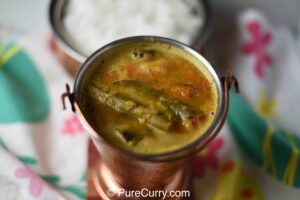
Sambar is a staple vegetable and lentil stew from South India. To the uninitiated, it may look like a simple soup—but a good sambar has a very specific texture: creamy lentils paired with vegetables that are tender yet clearly defined.
This balance is what sets great sambar apart. It’s traditionally served with boiled rice and South Indian favorites like idlis (steamed lentil-and-rice dumplings), vadas (savory fried lentil doughnuts), and dosas (thin fermented crepes).
Across South India, sambar varies widely. Some versions lean slightly sweet with sugar or jaggery. Others change the mix of vegetables or tweak the spice blend—sambar powder—that gives the dish its unmistakable aroma and depth.
Ingredients That Define Sambar
The Lentils
Sambar is traditionally made with toor dal (split pigeon peas). When fully cooked, these lentils break down into a thick, creamy base that gives the stew its body.
The Spice Blend
The soul of sambar comes from sambar powder, a roasted spice blend typically made with dried red chilies, coriander seeds, fenugreek seeds, black peppercorns, curry leaves, asafetida, and split chickpeas (chana dal). Some regional blends may include urad dal, extra toor dal, or coconut.
TIP: Store-bought sambar powder is convenient, but often quite spicy. Making it at home lets you control both heat and aroma.
The Vegetables
Common vegetables include pumpkin, drumsticks, shallots, onions, squash, potatoes, carrots, okra, baby eggplant, and cluster beans. That said, sambar is flexible—use what’s in season or what you enjoy.
Cooking Sambar: The Practical Flow
Start by soaking and cooking the toor dal until it is completely soft. Once cooked, mash it well to create a smooth base.
Separately, cook the vegetables in tamarind water until just tender. They should hold their shape, not collapse into the stew.
Sauté the onions or shallots until lightly browned, then combine everything: lentils, vegetables, tamarind water, and sambar powder. Let the stew simmer gently so the flavors come together.
Finish with a traditional tadka—blooming mustard seeds, curry leaves, and asafetida in hot oil—and pour it over the sambar just before serving.
Science Note
This section is intentionally technical – feel free to skip if you just want to cook.
🧪The Science Behind Great Sambar
Lentil Hydration and Texture
Toor dal is a dense, high-starch lentil. Soaking it for about 45 minutes allows water to penetrate the seed coat and hydrate the starch granules. This leads to more even gelatinization during boiling.
Once cooked, mechanical agitation (mashing, traditionally called ghonta) releases starch into the cooking liquid, forming a stable emulsion that gives sambar its characteristic thickness and helps coat the vegetables evenly.
Acid and Pectin Management
Tamarind introduces acidity, which plays a crucial structural role. In general, acidic environments inhibit pectin breakdown, keeping plant cell walls intact.
In sambar, this works in our favor. Cooking vegetables in tamarind water strengthens their pectin structure just enough to allow them to soften without disintegrating. This is why pumpkin, carrots, and drumsticks remain intact instead of turning mushy.
Flavor Development
Sautéing onions or shallots initiates the Maillard reaction, creating complex savory compounds that form the base flavor of the stew.
The tadka technique extracts fat-soluble aromatic compounds from mustard seeds, curry leaves, and asafetida. Blooming these spices in hot oil ensures their essential oils are evenly distributed throughout the dish, enhancing aroma and depth in every spoonful.
Ready to cook? The detailed step-by-step instructions and measurements are in the recipe card below.
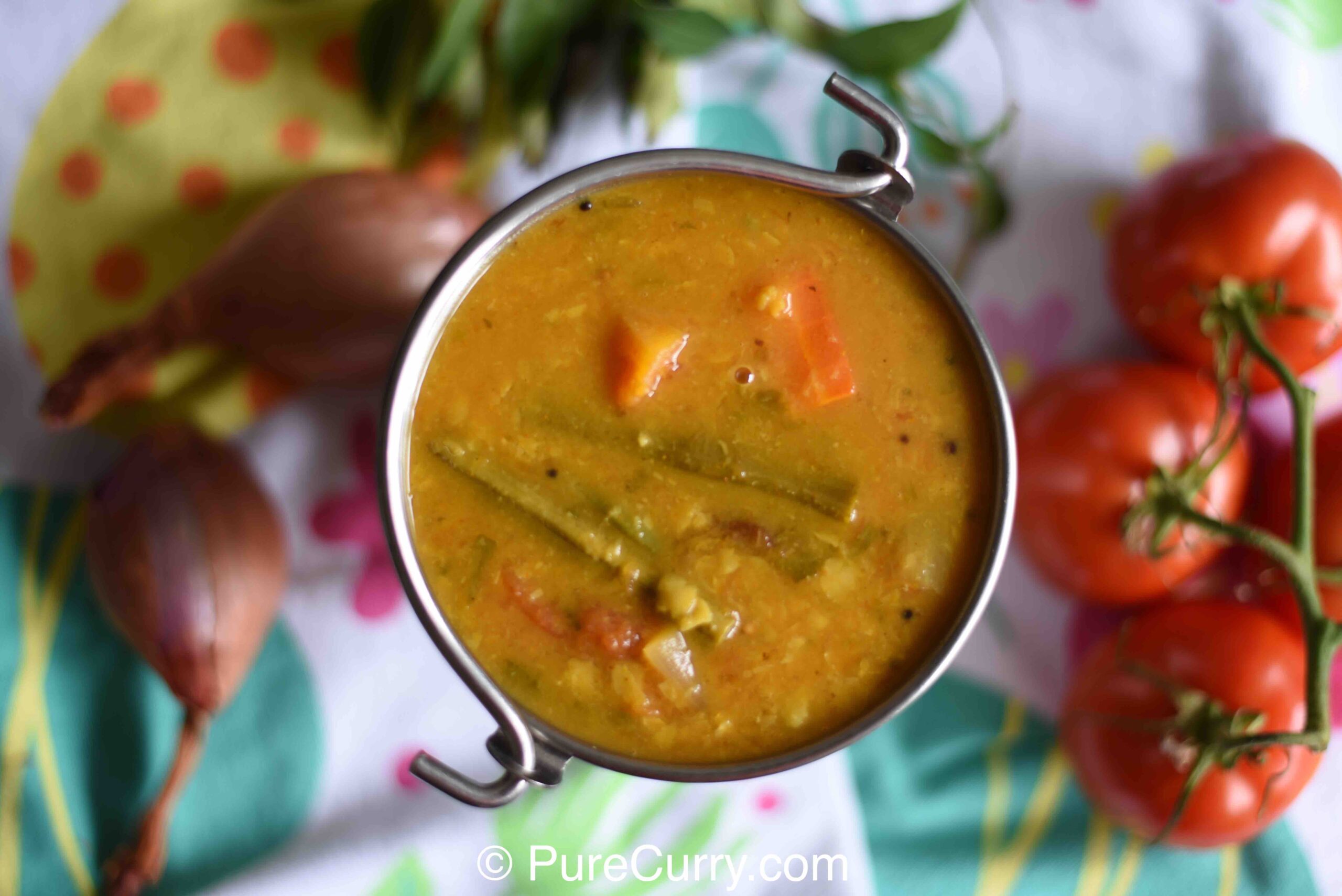
Sambar: South India’s Essential Stew
Ingredients
- 1 cup Toor Dal Split pigeon peas
- 2 tsp Salt
- 2 tbsp Vegetable Oil Or other preferred oil such as Coconut Oil
- 1 Onion Medium size, cut into large chunks
- 2 Tomatoes coarsely chopped
- 2 cups Sambar Vegetables Traditionally used vegetables are Pumpkin, Carrots, Drumstick, Okra, Eggplant, or Squash
- 1 tbsp Sambar Powder
- 1/2 tsp Turmeric
- 1/4 tsp Asafetida Hing
- 1/2 tsp Mustard Seeds
- 2 sprigs Curry Leaves
- 1 tbsp Tamarind Paste Substitute with Lemon Juice
Method
- Rinse the Toor Dal thoroughly. Soak the dal in warm water for 20 minutes (or cold water for 45 minutes). This hydrates the core of the lentil, ensuring it cooks evenly without a chalky center.1 cup Toor Dal
- Drain the water. Boil the dal in 6 cups of fresh water with 1 tsp Salt for about 30 minutes.2 tsp Salt
- The dal is done when it loses its shape entirely. Use a whisk or the back of a ladle to mash the lentils vigorously, to release the starch into the water to create a thick, creamy suspension.
- Heat the oil in a heavy-bottomed pot. Add the Mustard Seeds, Curry Leaves, and Asafetida.2 tbsp Vegetable Oil, 1/2 tsp Mustard Seeds, 2 sprigs Curry Leaves, 1/4 tsp Asafetida
- Wait for the mustard seeds to pop. This indicates the oil is hot enough to extract the fat-soluble flavors. This step builds the aromatic foundation of the stew.
- Add the chopped Shallots (or onions) and fry for 2 minutes until the edges turn translucent or slightly golden.Science TIP: Light browning on the shallots triggers the Maillard reaction, which creates savory, roasted flavor compounds. A little browning adds savory depth. Don’t overcook—the goal is flavor, without introducing bitterness or overpowering the stew, not dark caramelization.1 Onion
- Next, add your firmer vegetables (like carrots or drumsticks) along with 1/2 tsp Salt and fry for another 2 minutes.2 cups Sambar Vegetables
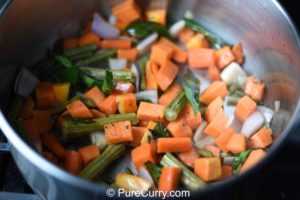
- Add the chopped Tomatoes, Turmeric, and Sambar Powder. Mix well and cook for 2 minutes. Blooming Spices: Cooking the spices in the oil/onion mixture helps bloom their flavors before we add the bulk liquids.2 Tomatoes, 1/2 tsp Turmeric, 1 tbsp Sambar Powder
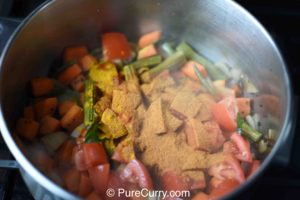
- Add 3 cups of hot water and the Tamarind paste/juice. Simmer for around 10 minutes until vegetables are tender. The Science of Firmness: Acid prevents softening, but in Sambar, we want this! Cooking the vegetables in acidic tamarind water strengthens their pectin, ensuring they hold their shape and don't turn into mush, even while boiling.Note: If using Lemon Juice instead of tamarind, do not add it yet. Wait until the very end.1 tbsp Tamarind Paste
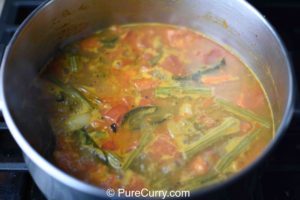
- Add the mashed, boiled Toor Dal to the pot. Mix well. The starch from the dal will thicken the tamarind water.
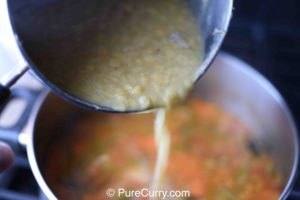
- Simmer covered for 10 minutes to allow the flavors to penetrate the lentils.
- Turn off the heat.Final Adjustments: Taste for salt. If you substituted tamarind with lemon juice, add the lemon juice now (to preserve its bright flavor notes).Garnish: Stir in fresh chopped Cilantro.

- Serve hot over steamed rice or with Idlis and Dosas to savor the complete protein combination!
Leave a Reply