
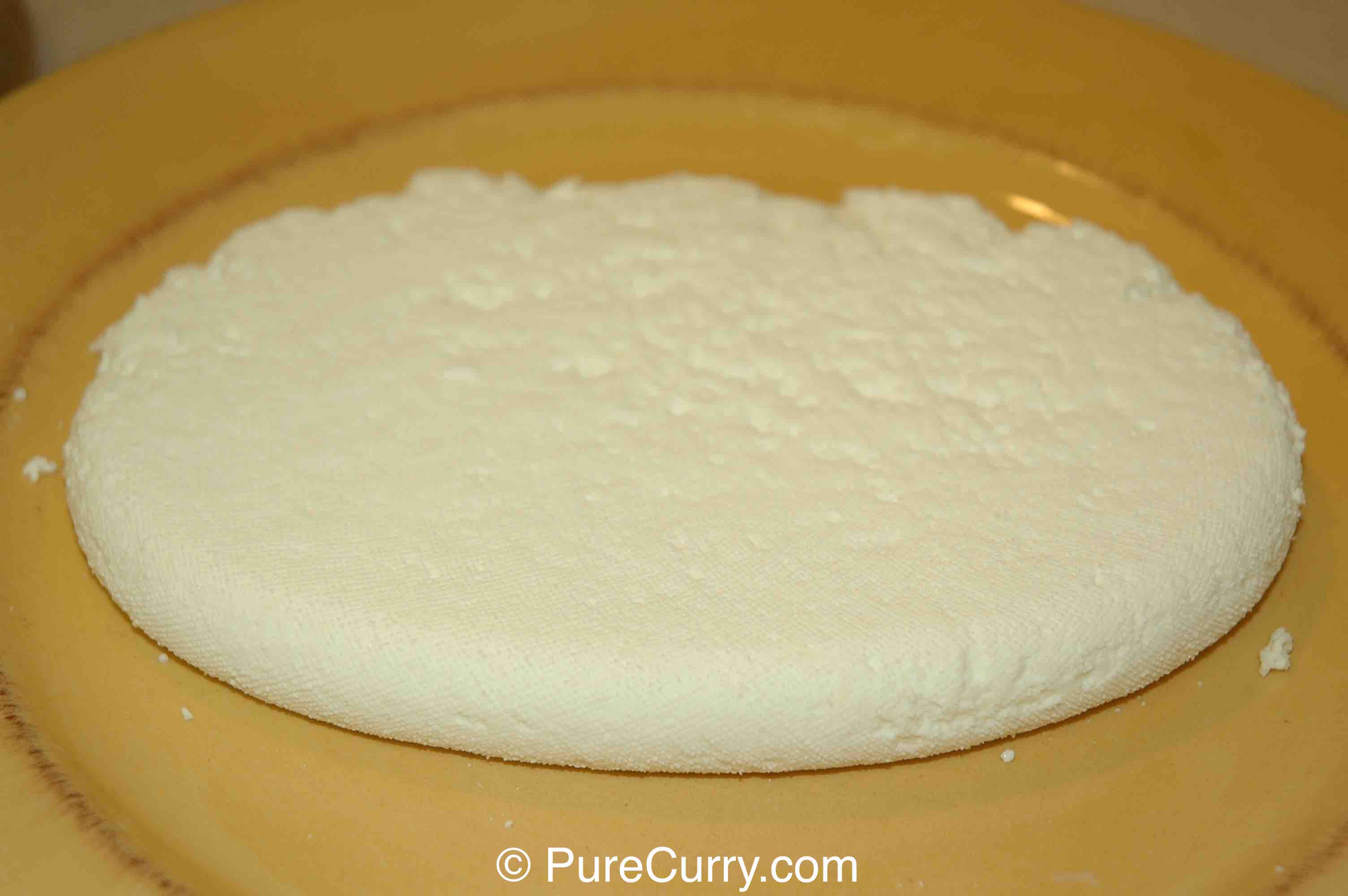
What Is Paneer?
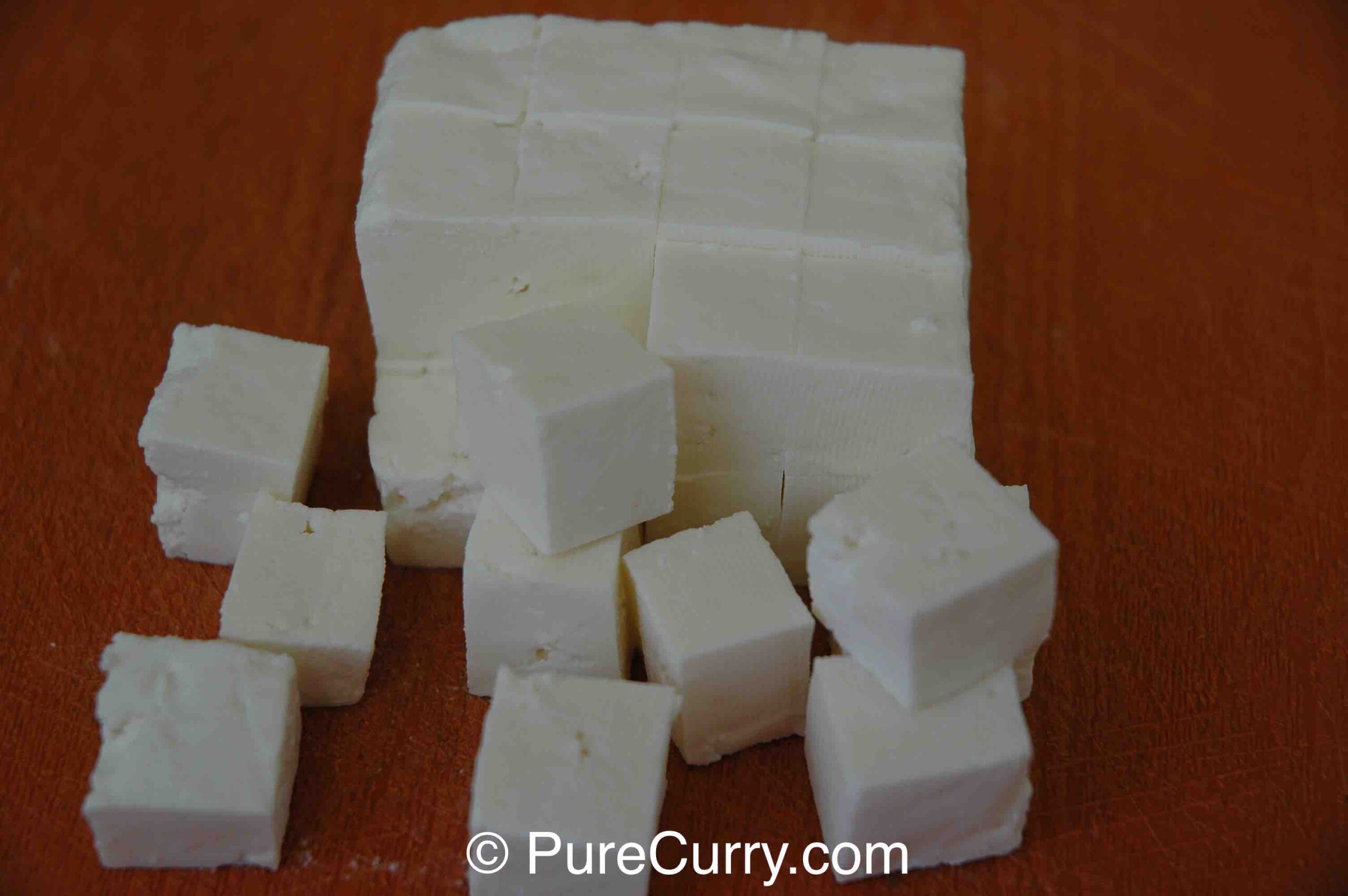
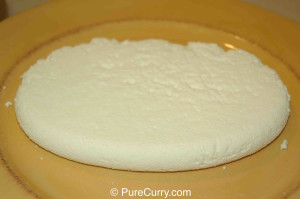
Paneer is a fresh, non-melting Indian cheese made by curdling hot milk with an acid such as lemon juice, vinegar, or yogurt, and then pressing the resulting curds into a firm block. Unlike aged cheeses, paneer is not fermented, salted, or ripened. Its flavor is mild and milky, and its texture is soft yet resilient—firm enough to hold its shape when cooked, but tender enough to absorb the flavors around it.
Because paneer doesn’t melt, it behaves very differently from cheeses like mozzarella or cheddar. Instead of disappearing into a dish, it remains distinct, acting almost like a protein, much like tofu in East Asian cuisines, while contributing a subtle dairy richness of its own.
Paneer is Special
For many Indians, paneer is tied to celebration and hospitality. Growing up, paneer dishes were often reserved for special occasions—family gatherings, festivals, or when guests came over. A meal that included paneer signaled care, generosity, and a bit of indulgence. There was always a paneer dish on the menu at dinner parties at my home. And often a paneer appetizer as well.
There’s also a quiet pride associated with homemade paneer. Many home cooks swear they can tell the difference immediately: fresher aroma, softer texture, and none of the rubberiness that store-bought paneer can sometimes have. In fact, in many households, making paneer at home is considered a basic kitchen rite of passage.
🧪The Science: How Milk Turns Into Paneer
Milk is an emulsion—a stable mixture of water, fats, proteins, and sugars. The key proteins involved in paneer-making are casein proteins, which exist in milk as tiny clusters called micelles. These micelles are naturally negatively charged, which causes them to repel one another and stay evenly dispersed in the liquid.
When you add an acid (such as lemon juice or vinegar) to hot milk, two things happen:
- pH drops
The acid lowers the pH of the milk toward casein’s isoelectric point (around pH 4.6). At this pH, the casein proteins lose their electrical charge. - Protein aggregation
Without their charge-based repulsion, the casein micelles begin to clump together. Heat accelerates this process by partially denaturing the proteins, making them more likely to bond.
As the casein proteins aggregate, they trap fat and some water, forming soft white curds. The remaining liquid (called whey) contains water, lactose, minerals, and some soluble proteins. Straining separates the curds from the whey, and pressing the curds expels additional moisture, giving paneer its final texture.
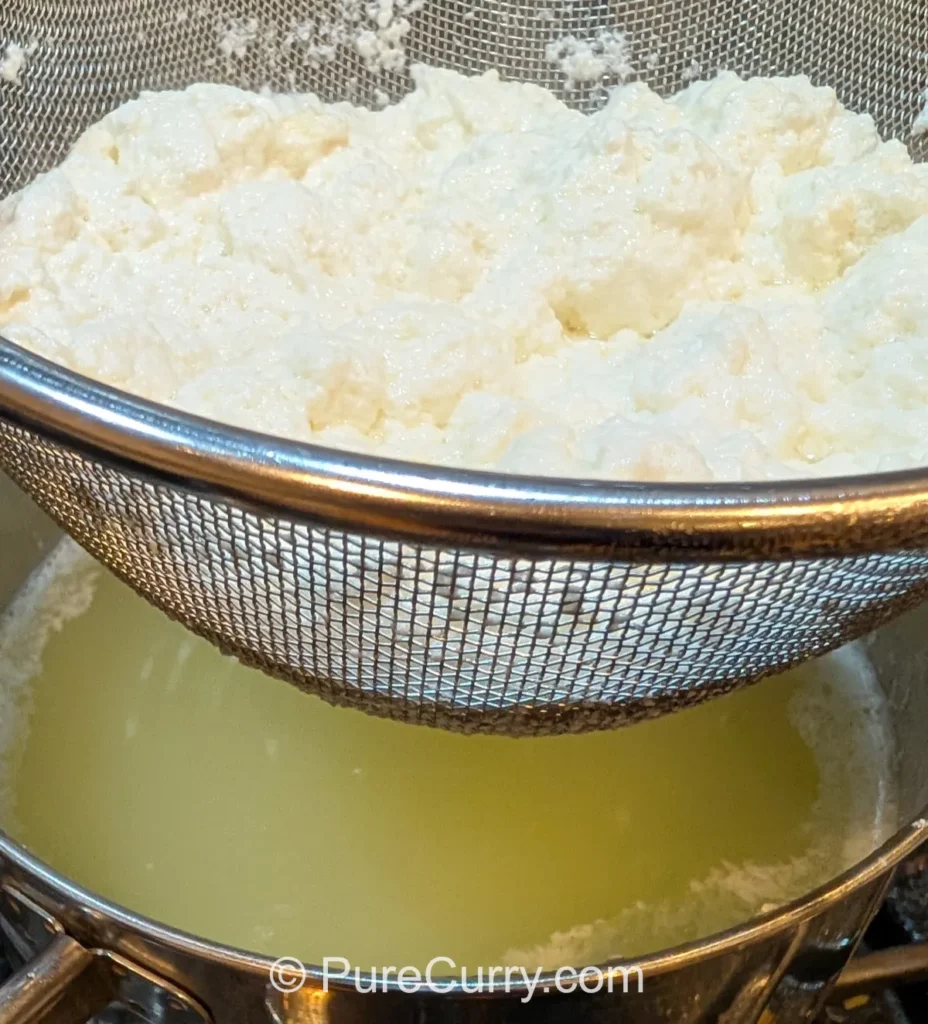
Should You Fry Paneer?
Paneer can be added fresh to a dish, but it is often fried and in restaurants it is almost always fried. Whether you fry paneer or not depends on the dish and the texture you want.
Many cooks split the difference by lightly frying paneer and then soaking it briefly in warm water to soften the exterior again.
Reasons to Fry Paneer
- Creates a lightly crisp outer layer that helps the cubes hold their shape in sauces.
- Adds a subtle nutty, savory depth.
- Prevents paneer from breaking apart in vigorous cooking.
Reasons Not to Fry Paneer
- Fresh paneer is naturally soft and creamy; frying can make it firmer or slightly chewy.
- In delicate dishes, such as lightly spiced gravies, frying can overpower the subtle milk flavor.
- Adds extra fat to the dish.
How to Fry Paneer (Step-by-Step)
- Cut the paneer
Slice into evenly sized cubes or slabs to ensure uniform browning. - Heat the fat
Heat a shallow layer of neutral oil or ghee in a pan over medium heat. - Pan-fry gently
Add the paneer in a single layer. Fry until the underside turns light golden, then flip and repeat. Avoid high heat, which can toughen the paneer. - Optional soaking step
Transfer the fried paneer to a bowl of warm, lightly salted water for 5–10 minutes. Drain before adding to your dish. This restores moisture and tenderness.
🧪The Science: What frying does to Paneer
When paneer is fried, several chemical and physical changes occur at its surface:
Moisture loss
Heat drives off surface water, allowing temperatures to rise above the boiling point of water.
Maillard reactions
Once the surface dries sufficiently, amino acids from milk proteins react with lactose (a reducing sugar) in a series of reactions known as the Maillard reaction. This produces hundreds of new flavor and aroma compounds—nutty, savory, and slightly sweet.
Textural change
Heat causes further protein denaturation and tightening, which firms up the exterior. This is why fried paneer feels more structured than fresh paneer.
Importantly, paneer does not melt during frying because its proteins have already been acid-coagulated. Without the elastic protein network found in melting cheeses, paneer retains its shape even at high temperatures.
What to Do With the Whey
When you make paneer, the pale yellow liquid that separates from the curds is whey. It’s rich in lactose, minerals (like calcium and potassium), and small amounts of soluble proteins. Its flavor is mildly tangy, thanks to the acid used for curdling, and that gentle acidity makes it surprisingly versatile in the kitchen.
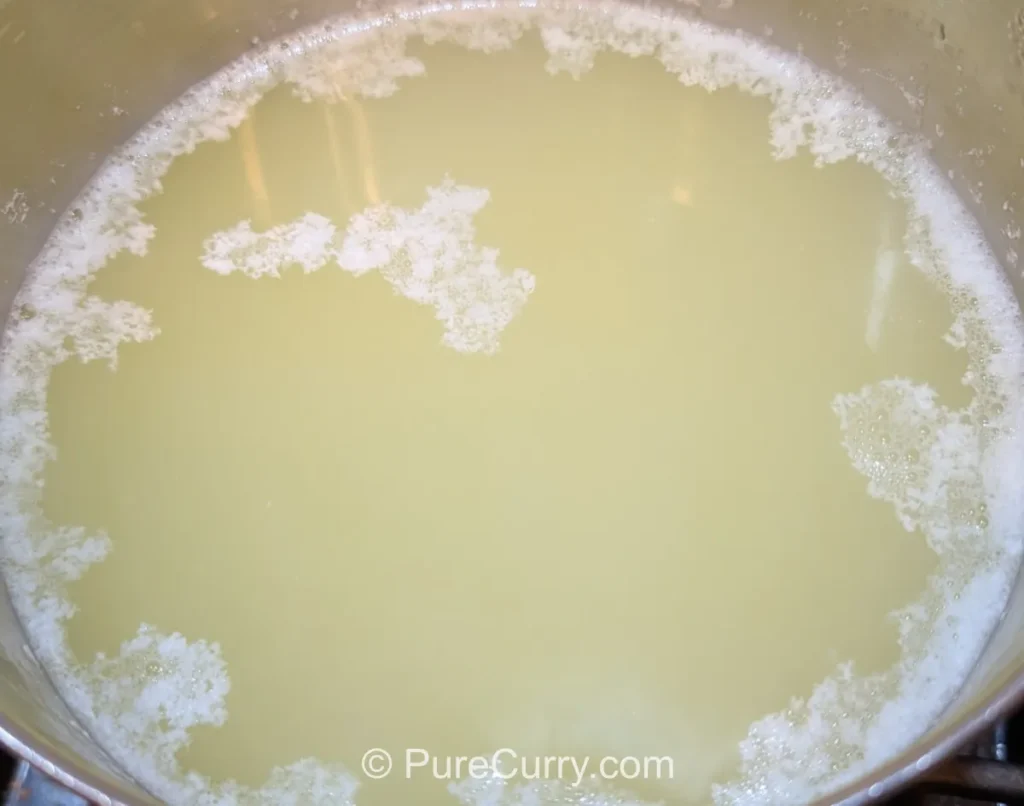
Using whey not only reduces kitchen waste but also extends the value of your homemade paneer. You follow one simple process and get two useful ingredients, and nothing wasted.
Use Whey in Cooking
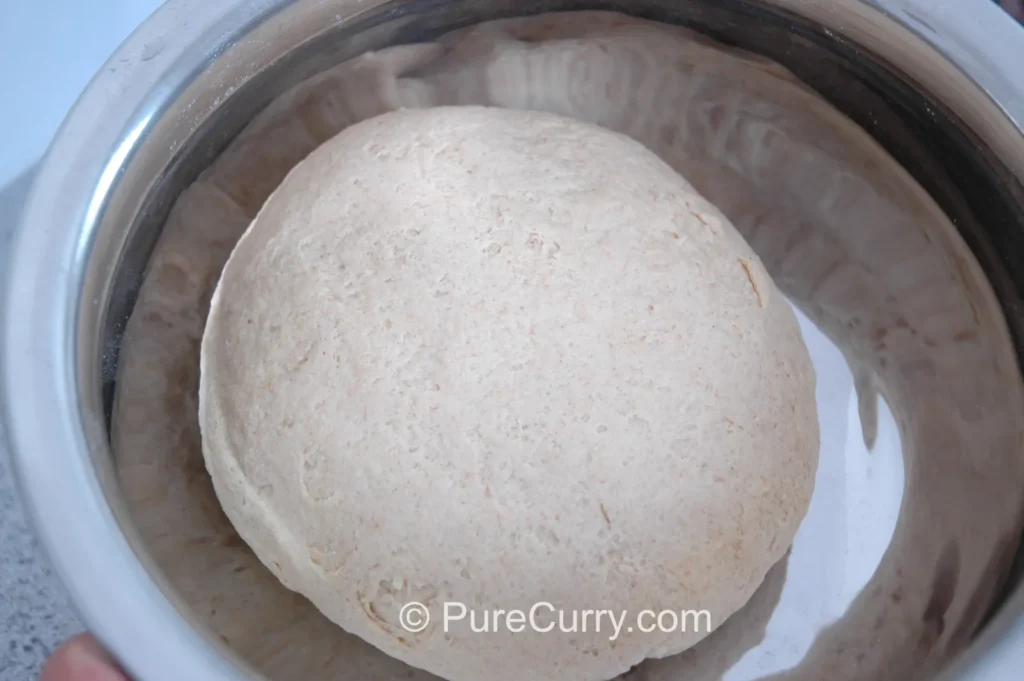
Knead dough
Use whey instead of water when making dough for roti, paratha, or bread. The lactose promotes better browning, and the minerals subtly improve flavor.
Cook grains and lentils
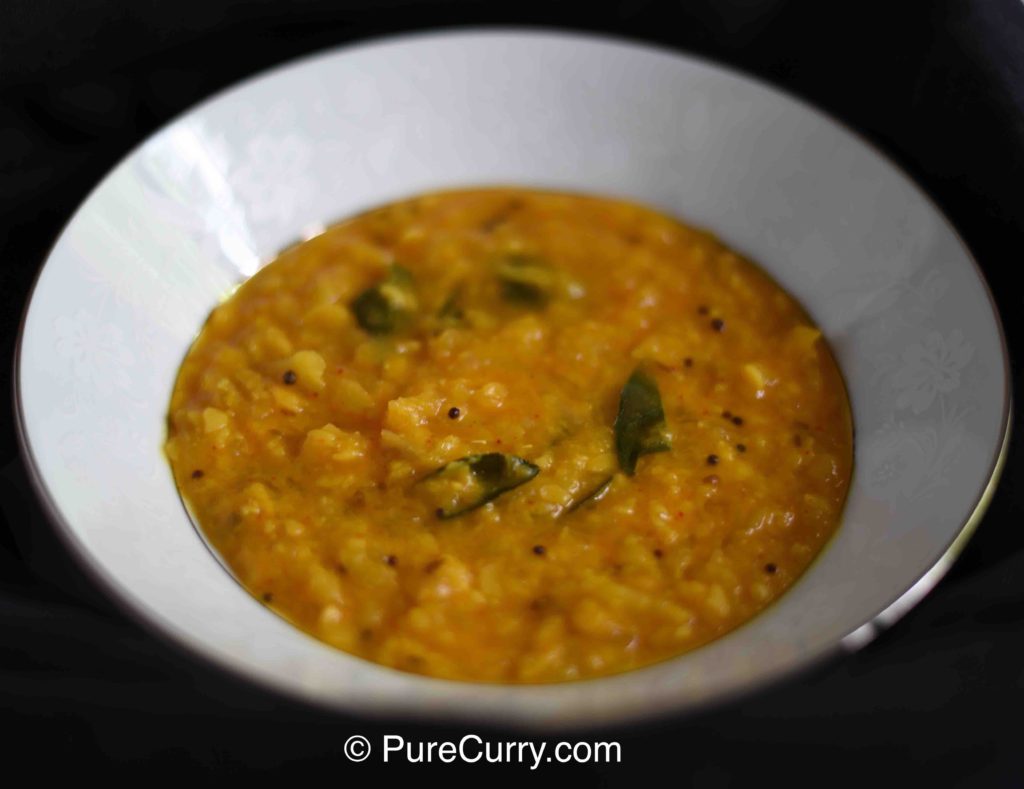
Whey can replace water when cooking rice, quinoa, oats, or even dal. It adds a light tang and extra nutrients without overpowering the dish.
Soups and stews
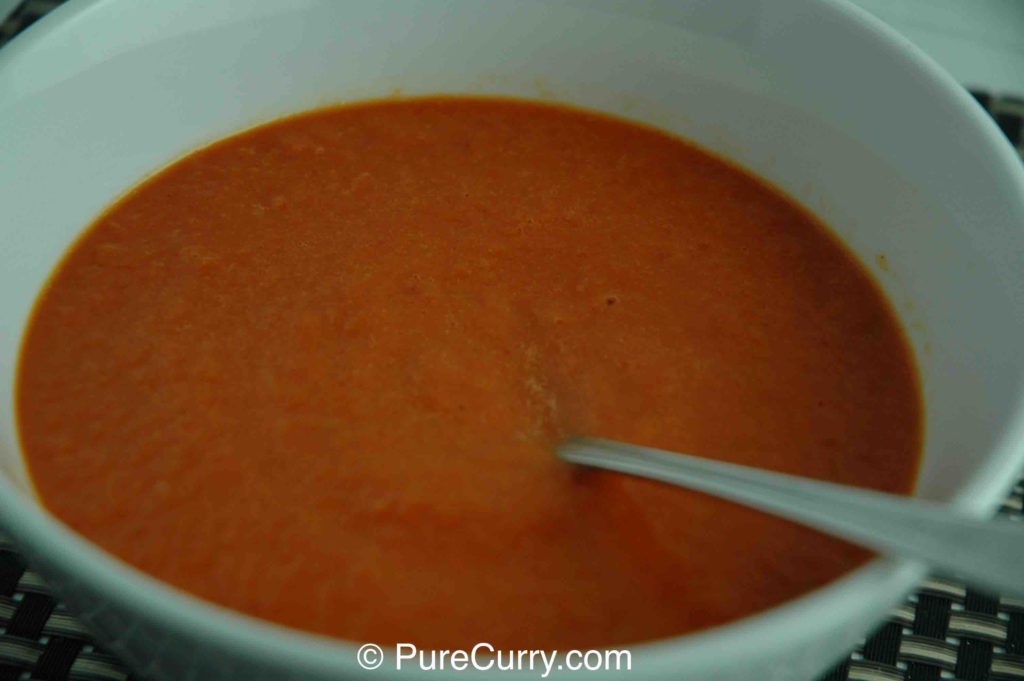
Add whey to vegetable soups or broths for body and brightness. It works especially well in lightly spiced soups. Adding the whey to Chicken Curry or Peas Paneer Curry instead of water, will add a ton of flavor.
Use Whey in Baking
Whey behaves a bit like buttermilk:
- Substitute it for water or milk in pancakes, muffins, and quick breads.
- The acidity helps tenderize gluten and can improve crumb structure.
- Lactose enhances browning and adds a gentle sweetness.
Fermentation and Cultured Foods
Soaking grains and legumes
Use whey to soak beans, lentils, or whole grains before cooking. The mild acidity can reduce cooking time and improve digestibility.
Fermented batters
Whey can jump-start fermentation in batters for idli, dosa, or other fermented preparations.
Drinks and Smoothies
If the whey is clean and not overly acidic:
- Add it to smoothies in place of water.
- Mix with a pinch of salt and spices for a light, refreshing drink.
- Use it as the liquid base for protein shakes.
Garden and Household Uses
Plant fertilizer
Dilute whey with water (about 1:1) and use it to water acid-loving plants.
Composting
Whey adds moisture and nutrients to compost piles.
A Note on Storage
Fresh whey can be stored in the refrigerator for 2 to 3 days. If it smells overly sour or unpleasant, it’s best to discard it or if you compost, consider adding it to your compost pile.
Fresh Paneer
Method
- Heat the milk in a thick-bottomed pot on medium-high heat and until it starts to boil. Depending on your pot and the heat level of your stove this will take around 10-15 minutes. Keep an eye on the pot so it doesn't boil over.
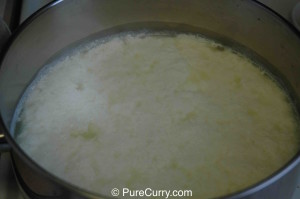
- When the milk comes to a boil, take it off the heat and add the White Vinegar/Lemon Juice. You'll notice that it starts to curdle immediately. Let it stand for about 10 minutes so that the milk curds separate out completely from the whey.
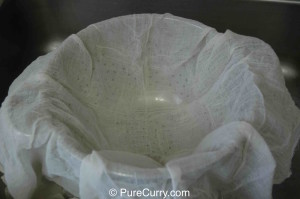
- Place a colander lined with a cheese cloth inside a large pot.
- Pour the curdled milk into the cheese cloth and completely drain the whey.
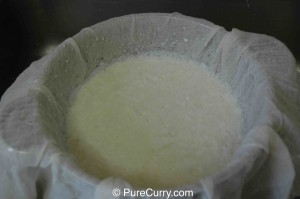
- You'll need to stir the curdled milk to speed up the whey draining out.
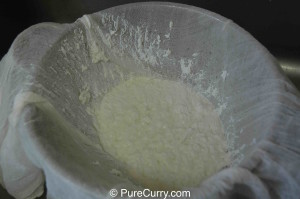
- When the whey has been most drained, to remove some more of the remaining whey, pick up the cheese cloth and tie a knot at the open end and squeeze it.
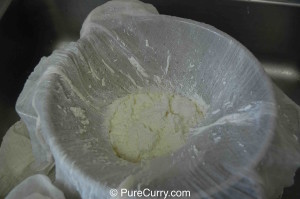
- Completely squeeze out remaining whey from the Paneer. You need to place a heavy weight on the cheese cloth paneer bundle, so that all the remaining whey is squeezed out.
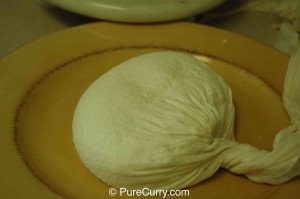
- You need to place a heavy weight on top of the bundle. To do this you can place another plate on top of the bundle with a heavy weight such as a can of tomatoes or a gallon liquid can. I use a marble rolling board since it’s convenient.
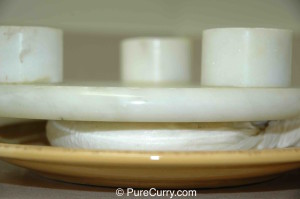
- You could place it on a large plate with the knot on one side so that when the Paneer sets you get a nice block.
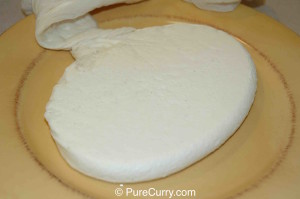
- Let it stand for at least 45 minutes and the Paneer will be ready.


Leave a Reply