
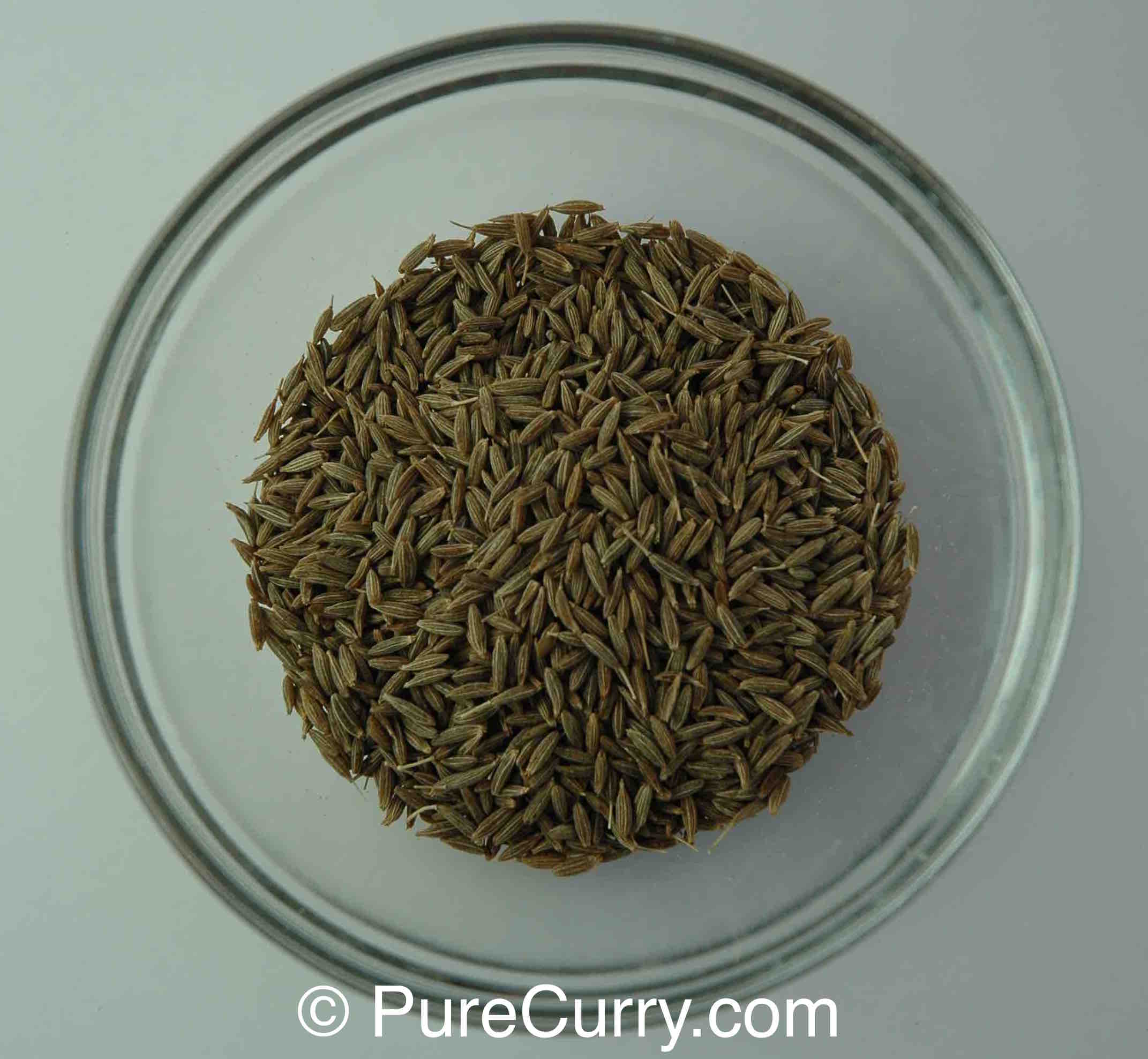
You will often see Indian food recipes asking to add cumin seeds to the cooking oil as the first step. This is done to flavor oil before adding the other ingredients. There is a reason why it is added to the hot oil, and not just dropped into the sauce during the cooking. This process of adding the spice to hot oil is sometimes called blooming or tempering. It draws the spice’s aromatic oils into the fat, forming the flavor base of the recipe.
The Oil Temperature Matters
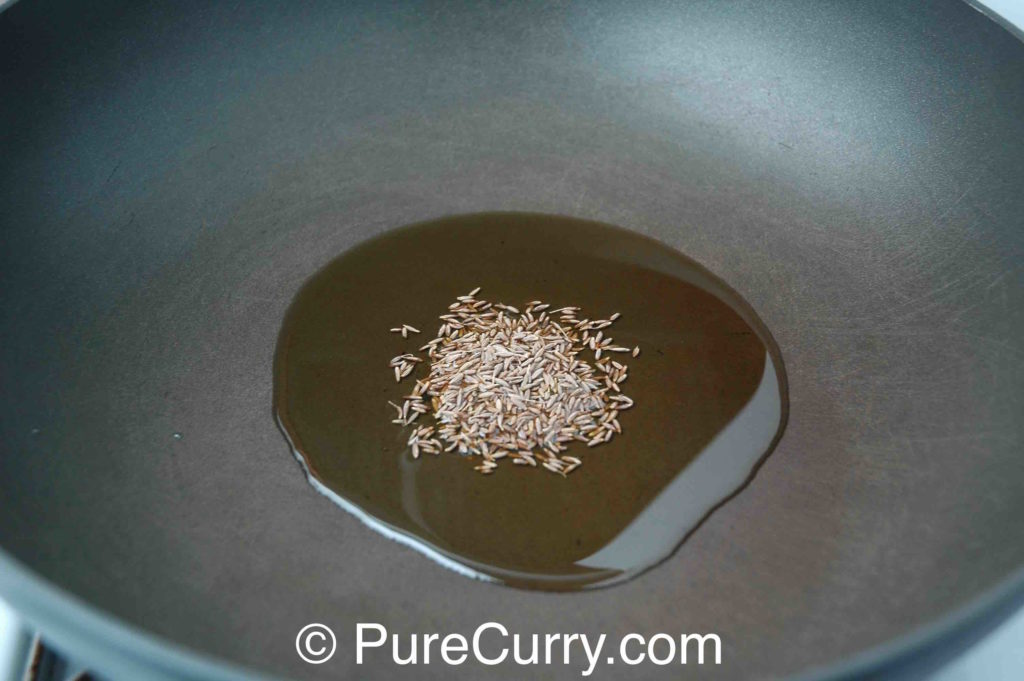
If cumin seeds are added to oil that’s still warming:
- They won’t sizzle,
- They release their aroma slowly and incompletely, and
- Much of the fragrance escapes into the air instead of infusing the oil.
The result is a dish that tastes flatter and less aromatic, even though the cumin is present.
When cumin seeds hit oil that’s properly heated:
- They sizzle immediately.
- They swell slightly and release their essential oils.
- The oil becomes fragrant in seconds.
This quick reaction means the cumin’s flavor is captured by the oil and carried throughout the dish. Light browning (The Maillard Reaction) adds a warm, nutty depth that’s characteristic of many Indian recipes.
Don’t Let Them Burn
Cumin seeds brown quickly – sometimes in just a few seconds. Once they turn dark brown or black, they become bitter. To prevent this:
- Add cumin to hot oil,
- Let it sizzle briefly, and then
- Immediately add the next ingredients (onions, vegetables, lentils, liquid, etc.) called for by the recipe. This lowers the temperature of the oil and stops further browning so the seeds don’t burn.
Once the cumin seeds go in to oil that is ready, they usually only need 10–15 seconds. They should turn a shade darker (rich brown, not black).
If you accidentally burn the seeds (they turn black and the smoke smells acrid), toss them out. Burnt cumin is intensely bitter and will ruin the entire base of your dish. It’s better to restart than to try to mask it.
A Simple Test
To check if the oil is ready, drop in a single cumin seed.
If it sizzles right away, the oil is ready! Add the rest of the cumin seeds required by the recipe.
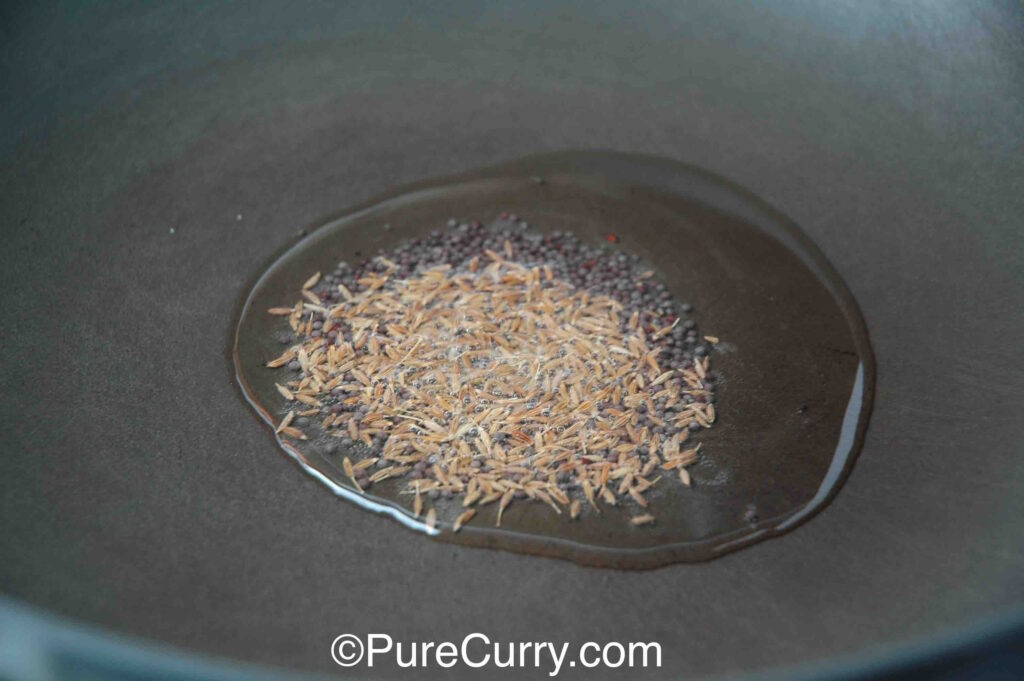
If it sits quietly, wait a bit longer and test with another seed…
The Key Takeaway
If the cumin seeds don’t sizzle in the oil, you’re not extracting the desired flavor from them. That brief sizzle is what transforms cumin from just another ingredient into a foundational flavor. Getting this step right can make the difference between a dish that tastes OK and one that smells and tastes deeply aromatic.
Leave a Reply