
Welcome to The Decoding Dal Series, a deep dive into the heart of the Indian pantry.
Aligned with Pure Curry’s philosophy of Learn. Create. Savor., this three-part series explores the science and soul of lentils, beans, and pulses. Whether you are confused by the grocery aisle or struggling to get the perfect texture, we are breaking it down step-by-step:
Part 1 (Learn) – Types of Indian Lentils Explained: Decoding the taxonomy, names, and processing methods of Indian legumes.
Part 2 (Create) – How to Cook Dal Properly: The physics and chemistry of soaking, salt, and heat for the perfect cook.
Part 3 (Savor) – Tadka Explained: Tempering, Browning, and Flavor Building in Indian Cooking.
In Part 1, we learned the language of dal. In Part 2, we mastered how to cook dals to get the perfect texture. But a bowl of plain boiled lentils, even when cooked perfectly, is not a meal. It’s a starting point.
Welcome to the Savor phase. This is where Indian cooking really comes alive.
Dal Is a Blank Canvas
What makes Indian dal different from lentil soups or stews around the world isn’t the ingredient, but the process.
We don’t just throw spices into boiling water and hope for the best. We build flavor in stages, using heat, fat, and timing to wake spices up and layer them into the dish.
This final step is what turns simple lentils into something aromatic, rich, and deeply satisfying.
Why Restaurant Dal Tastes Better Than Homemade Dal
If you’ve ever ordered Dal Fry at a restaurant and wondered why it tastes deeper and richer than what you make at home, here’s the main reason:
Restaurants brown things. Home cooks often boil them.
Boiling vs. Browning
When onions, garlic, or ginger are cooked directly in water with the lentils, they soften, but they never develop real flavor. Boiling keeps everything gentle and sweet.
When those same ingredients are cooked in hot ghee or oil until golden, something magical happens. They develop a nutty, savory depth that instantly makes the dal taste richer.
That golden browning is the backbone of restaurant-style dal.
How to Apply This at Home
For better dal:
- Cook your lentils separately until soft.
- In another pan, sauté onions, garlic, and ginger in ghee or oil until deep golden.
- Pour the cooked dal into this flavorful base and simmer together.
Same ingredients. Completely different result.
🧪The Science Behind the Flavor: The Maillard Reaction
When onions, garlic, or spices are cooked in hot oil or ghee until golden, they undergo what’s called the Maillard reaction, named after French chemist Louis-Camille Maillard. It is a chemical reaction between amino acids and reducing sugars that gives browned food its distinctive flavor.
This is the same process that gives toasted bread, roasted coffee, and browned butter their deep, savory flavor. It only happens at high heat and cannot occur in boiling water — which is why browning your masala before adding dal creates richer, more complex flavor than cooking everything together.
The Science of Tadka (Tempering)
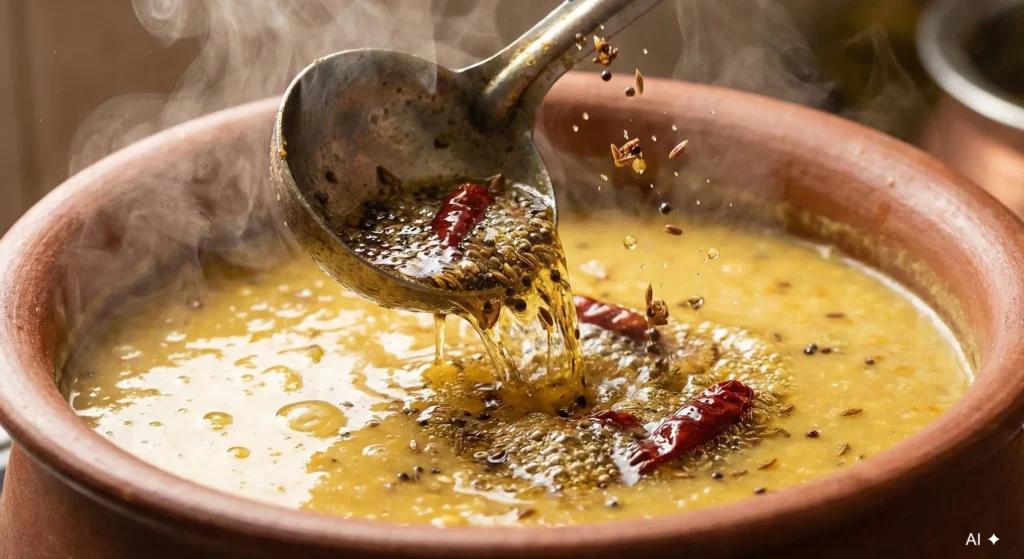
Tempering, also called Tadka, Chhaunk, Vaghar, Poricha in different parts of India, is the defining technique of Indian cooking.
Dal is not just a dish—it’s a structure. Changing the lentil, fat, or tempering creates entirely different cuisines.
Why Tadka Works
Most spice flavors don’t dissolve in water — they dissolve in fat.
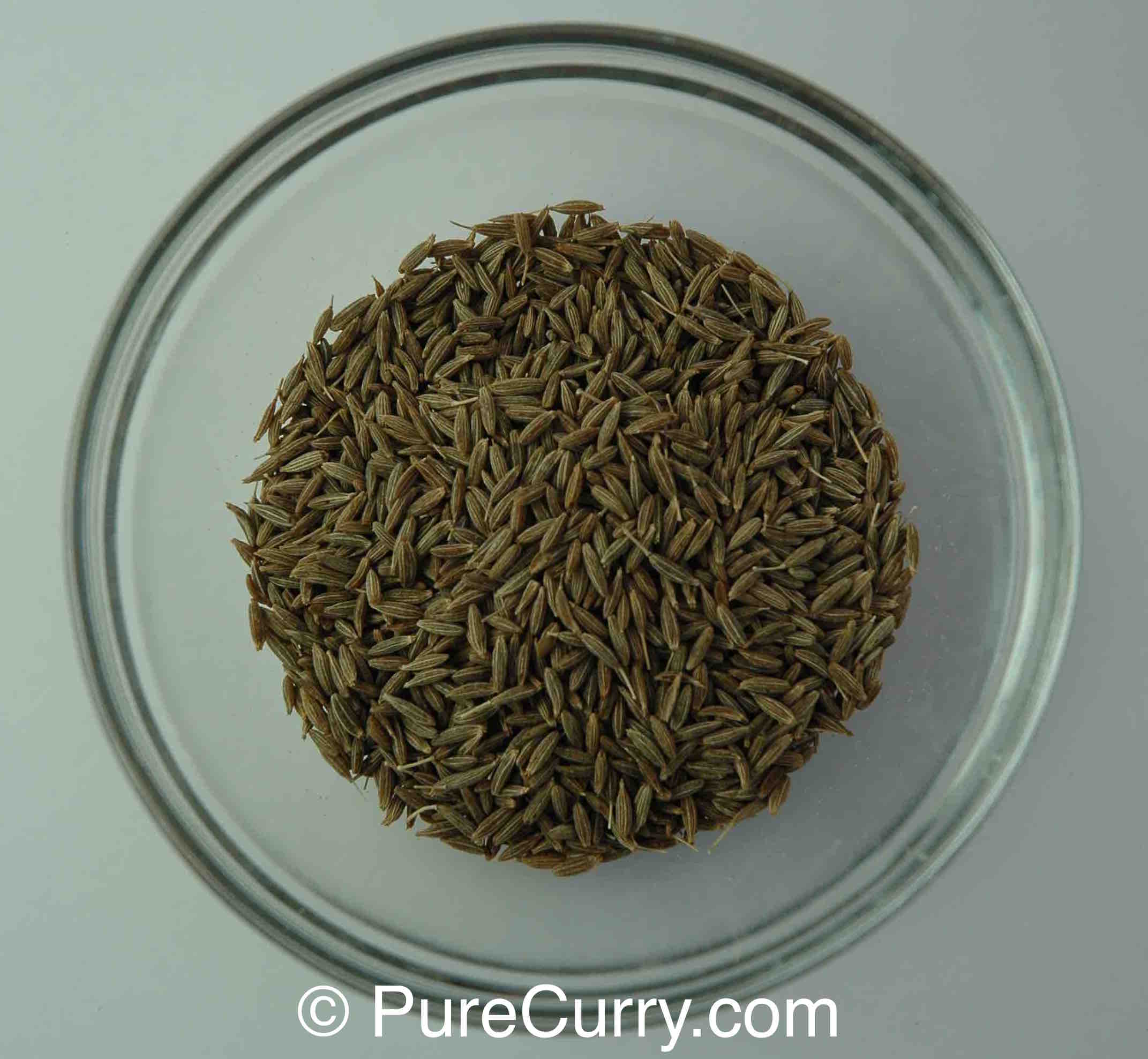
If you drop cumin seeds into boiling dal, their flavor stays locked inside. Drop those same seeds into hot oil, and they burst open, releasing aroma instantly.
When that fragrant oil is poured over dal, it carries the flavor into every spoonful.
That’s tadka.
🧪The Science Behind Tadka
Most flavor compounds in spices, like capsaicin in chili or cuminaldehyde in cumin, are hydrophobic, they hate water but love fat. Meaning that most of the flavor in spices doesn’t dissolve in water, it dissolves in fat.
When spices like cumin, mustard seeds, or dried chilies hit hot oil or ghee, their aromas are released instantly into the fat. When that flavored fat is poured over dal, it spreads those aromas evenly through the dish, which is why tadka makes every bite taste more fragrant and complete.
How to Do Tadka Without Burning the Spices
The biggest fear home cooks have is burning spices. That fear is most certainly justified. The trick is order.
The Right Order (Always)
- Hot oil or ghee
The oil should shimmer meaning it is hot, but not smoking. - Whole spices first
Cumin seeds, mustard seeds, dried chilies.
These need high heat to crackle and bloom. - Aromatics next
Garlic, curry leaves, onions.
They release moisture and calm the heat slightly. - Powdered spices last
Turmeric, chili powder, asafetida (hing) or others. These burn fast. Add them, stir once, and immediately:- pour the tadka over the dal or
- splash in a little water to stop the cooking
Get the order right, and tadka becomes easy and forgiving.
Dhungar: The Secret of Smoky Dal
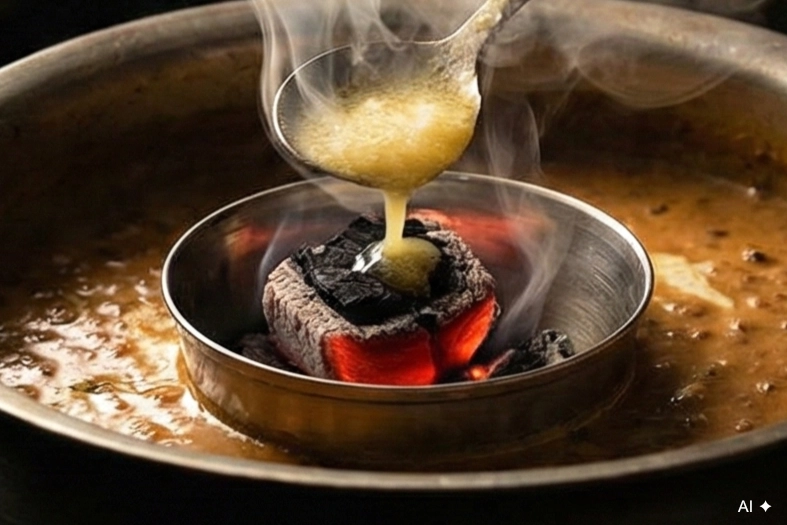
Ever wonder how Dal Makhani gets that subtle smoky aroma?
That’s dhungar — a simple smoking technique used in North Indian cooking.
You don’t need a tandoor or fancy tools. You just need smoke and fat.
How Dhungar Works (Simply)
Warm ghee absorbs smoke beautifully. When that smoky fat sits with the dal, the aroma spreads through the entire dish.
How to Do It at Home
- Place a small steel bowl (or a hollowed onion) on top of the cooked dal.
- Heat a piece of natural charcoal until it’s glowing red.
- Put the hot charcoal in the bowl.
- Pour 1 teaspoon of ghee over it — it will smoke immediately.
- Cover the pot tightly.
Timing matters:
- 2 minutes → gentle, elegant smokiness
- 8 to 10 minutes → bold, restaurant-style depth
Uncover, discard the charcoal, and stir.
Instant transformation.
🧪The Science Behind Dhungar
Fat is an excellent trap for volatile organic compounds (aromas). By exposing ghee to smoke within a closed container, the fat molecules capture the smoky essence and disperse it through the liquid matrix of the dal.
Creamy Dal Isn’t About Cream
That silky, creamy texture in great dal doesn’t come from cream, it comes from movement. You will hear Indian cooks refer to this as Ghonta.
🧪The Science Behind Agitation (Ghonta)
Vigorously whisking the cooked dal releases starch from the center of the lentils into the water. This starch acts as a thickener (emulsifier), binding the water and solids into a cohesive, creamy gravy.
The Simple Trick
After the dal is cooked whisk it vigorously with a wire whisk. Traditionally Indians have used a wooden churner (mathani).
This breaks down some of the lentils and releases their natural starch, thickening the dal and making it cohesive and velvety.
No additives. No shortcuts. Just technique.
Bringing It All Together
You’ve now completed the full journey of dal:
- You know what lentils you’re using
- You know how to cook them properly
- And now, you know how to make them shine
We started with a dry, rock-hard seed.
We learned how to hydrate it, cook it, flavor it, and finally elevate it.
Dal isn’t complicated. Once you understand the steps to making dal, every pot of dal you make gets better.
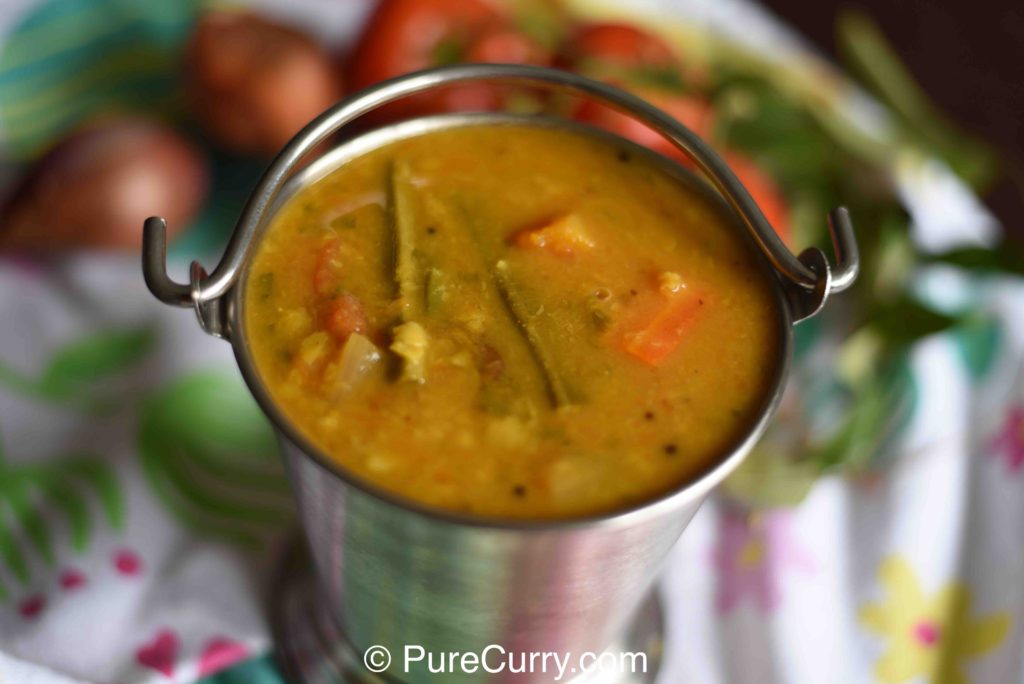
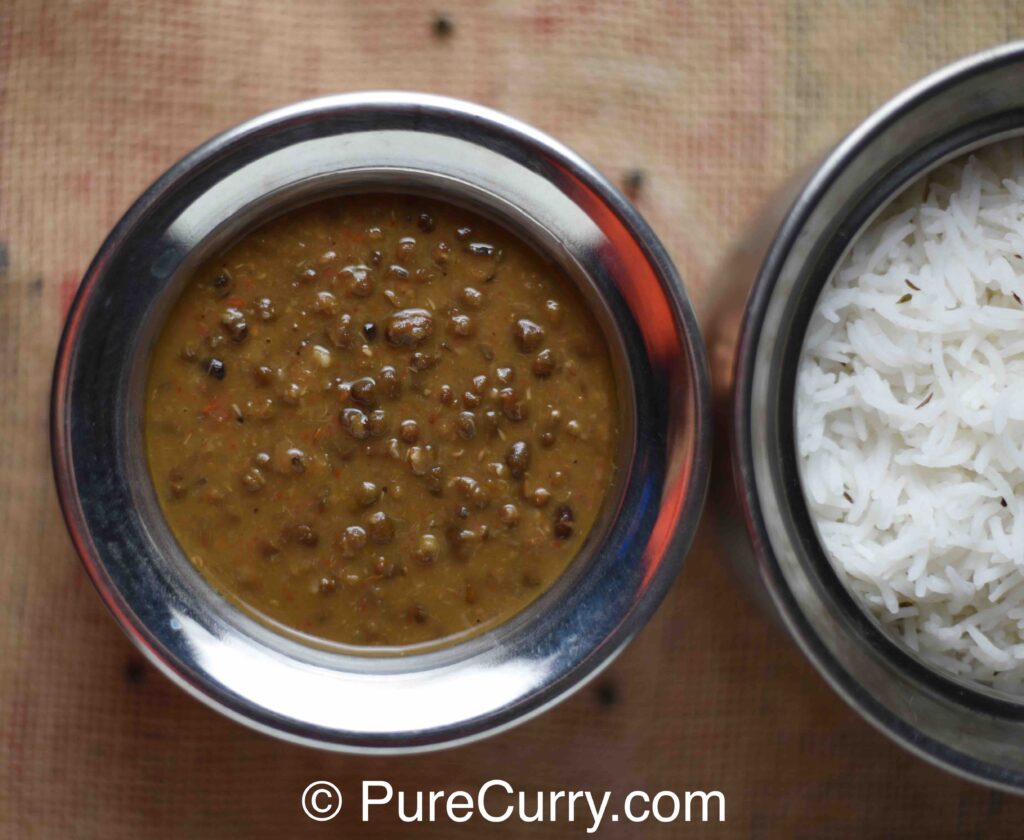
Put your new knowledge to the test with some recipes that highlight the techniques we’ve discussed, or use these principles as a framework to create your own dals with ingredients like coconut, green mango, or seasonal vegetables.
Leave a Reply